Empress Sisi in Vienna: A Cultural Travel Guide to the Woman Behind the Myth

Where can you discover the real Empress Elisabeth, better known as Sisi, in Vienna? From the Hofburg’s Sisi Museum, Schönbrunn Palace, and Hermesvilla to imperial churches, parks, and lesser-known landmarks, this cultural travel guide follows the places that shaped her extraordinary and often troubled life. Explore the woman behind the legend through her many identities: empress, beauty icon, equestrian, poet, mediator, and restless wanderer.
Continue the journey with The Traveler’s Triptych Sisi itineraries, which explore Elisabeth’s life and legacy through thoughtfully curated experiences in Vienna and Budapest.
Sisi: An Introduction
Empress Elisabeth of Austria, better known as “Sisi,” is omnipresent in Vienna, arguably second only to Mozart as a tourist magnet. Her image graces the banners hung outside the Sisi Museum, turns up in portraits at the Hofburg and Schönbrunn Palace, and peers back at passersby from countless shop windows. Hers is the face that launched a thousand souvenirs.

Entrance to the Sisi Museum in the Hofburg Palace, Vienna. Photo: Catherine Barnes.
One has little choice but to be mesmerized by her beauty. As I discovered on my first trip to Vienna several decades ago, and am reminded upon every return, Sisi doesn’t just catch the eye; she holds it. Her presence in Budapest, by contrast, is more discreet, shaped by Hungary’s separate history in the 20th century.
By the standards of her time, Sisi was fiercely independent, intellectually curious, and exceedingly athletic, exuding an energy that still echoes in the places tied to her story.
First introduced to many Americans in the “Sissi” film trilogy of the 1950s, starring Romy Schneider, she’s enjoyed a resurgence in popular culture thanks to recent television series and films, including The Empress, Sisi: The Austrian Empress, Corsage, and Sisi & I.
Sisi’s beauty, the mystique surrounding her, and the grandeur of the Habsburg court often conspired to produce highly romanticized depictions of her life. To varying degrees, but with the same historical and editorial license as the earlier films, the recent portrayals delve more deeply into Sisi’s contradictions, compulsions, and complexities.
While far less of a fairy tale, the truth is far more interesting, and well worth building a trip around. The real Elisabeth enjoyed a carefree childhood in Bavaria, was swept into a dynastic marriage and formal ceremonial court with which she never fully made peace, and lived out her life as a restless, melancholy figure. Sisi cultivated an almost impossibly polished image, while increasingly shunning court rituals and public engagements.
Planning a short stay in Vienna? Get the complimentary 3-Day Sisi in Vienna itinerary with newsletter sign-up. Access the free itinerary.
Who Was Empress Sisi, Really?
[Sisi] played none of the roles assigned to her by tradition and surroundings: not the role of loving and devoted wife, not the role of mother, not the role of principal figurehead of a gigantic empire…She insisted on her rights as an individual –– and she prevailed. That her self-realization did not make her happy is the tragedy of her life.
– Brigitte Hamann, Sisi Biographer and Author, The Reluctant
Empress, as quoted in Smithsonian Magazine
Sisi: The Free-Spirited Bavarian Girl
Before becoming an empress, Elisabeth was a free-spirited Bavarian duchess who preferred mountain walks to turns around the ballroom. The fourth of ten children of Duke Maximillian Joseph and Princess Ludovika of Bavaria, Sisi divided her time between Herzog-Max-Palais in Munich and Possenhofen Castle on the western shore of Lake Starnberg.
Grooming and Scheming Go Awry
By the standards of 19th-century royalty, Sisi’s upbringing was unusually informal, unstructured, and unrestrained. Unlike her older sister, Helene, who was groomed for a royal marriage and schooled according to rigid court protocols and rituals, Sisi spent her time hiking, riding horses, and surrounding herself with animals, including her adored dogs.

In her tailored riding habit, Sisi appears not as court ornament but an accomplished rider, her equestrian dress reflecting control and a sense of autonomy beyond the constraints of imperial life. This portrait was an engagement gift to Emperor Franz Jospeh and reporting hung above his bed for 60 years. Photo: Public domain.
The family plan, conceived by their respective mothers who were themselves siblings, was for Sisi’s older sister Helene to be betrothed to Emperor Franz Joseph I. Sisi accompanied her mother and sister to the resort of Bad Ischl in 1853 for precisely this purpose. The emperor’s acquiescence in this matter was wholly taken for granted. As it turned out, it was the more vivacious Sisi who caught his eye. She was only 15.
Culture Clash
At such a tender age, how could Sisi have anticipated the culture shock of her arrival at the Hofburg, the Habsburgs’ principal winter residence in the heart of Vienna’s inner city (“Innere Stadt”)?
Even today, its ceremonial gravity and that of imperial Vienna are far removed from Bavaria’s Alpine habitat. Without knowing the full backstory, the progression from formal courtyards to the gilded interiors that now house the Sisi Museum and Imperial Apartments makes it easy to imagine a nature-loving teenager suddenly trapped in a gilded cage, bound by formal protocol. And, why the city’s greener spaces felt more like “home.”
VISITOR INFORMATION
FURTHER VIEWING AND READING
Temporary closure
The Sisi Museum will be closed from 6 October to 18 November 2026. The museum is undergoing a major redesign and expansion, adding 12 rooms and roughly 700 square meters of exhibition space. The newly reconfigured museum is scheduled to reopen on November 19, 2026, along with the Imperial Silver Collection, which has been closed for several years. The Imperial Apartments will remain open during this time with discounted admission.
Sisi: A Reluctant Empress
The fairy tale curdled quickly. Married to Emperor Franz Joseph in 1854 at the age of 16 and pregnant within a year, Elisabeth found herself hemmed in on several fronts. The Habsburg court in Vienna remained one of Europe’s most formal and ceremonial courts throughout Sisi’s lifetime, with rigid etiquette, elaborate uniforms and gowns, and major set-piece events at the Hofburg and Schönbrunn. Here, individuality and spontaneity were not admired so much as managed out of existence.

Franz Xaver Winterhalter’s iconic 1865 portrait of Empress Elisabeth (Sisi), Sisi Museum, Hofburg Palace, Vienna. Photo: Public domain sourced via Wikimedia Commons.
Beyond balls and audiences in the Hofburg, Sisi was expected to attend public-facing events, including religious ceremonies, music premieres, and major civic celebrations along the Ringstraße, as well as make charity visits to hospitals and other institutions. Over time, she increasingly withdrew from Vienna’s public stage even as the city’s imperial grandeur and Sisi’s own popularity reached their height.
Sisi also had to contend with her mother-in-law, the formidable Archduchess Sophie, whose authoritarian tendencies cemented her reputation as the “only man in the Hofburg.” The Archduchess controlled the imperial household and directly oversaw the care and upbringing of Sisi’s children, refusing to cede these responsibilities to the young empress. When Sophie and Sisi disagreed, which was often, the emperor typically deferred to his mother. It was hardly the recipe for wedded bliss.
VISITOR INFORMATION
FURTHER READING
Sisi: The Beauty Icon and Fashion Influencer
Noted Sisi scholar and art historian Olivia Bruber Florek contends that many of Sisi’s portraits and photographs suggest a woman who saw herself more as a celebrity than as a conventional empress. Today, we might consider her an early “influencer” in the realms of beauty and fashion.
Beauty Rituals
Sisi wasn’t just a natural beauty. She kept an exacting beauty regimen that included hours-long hair rituals with her court hairdresser, cold showers in the mornings, oil baths in the evenings, steam baths and massages, and an array of facial tonics and skin treatments (including raw veal facemasks and cider-vinegar wraps). Sisi was on a constant hunt for the fountain of youth. “Crème Céleste,” among her favored treatments, was an early form of cold cream made from refined beeswax, whale fat, sweet almond oil, and rosewater.
To maintain her slender figure, Sisi followed a rigorous daily exercise routine, corset “tightlacing,” and a series of highly restrictive diets often consisting of milk, eggs, broths, oranges, and other spare, largely vegetarian fare.
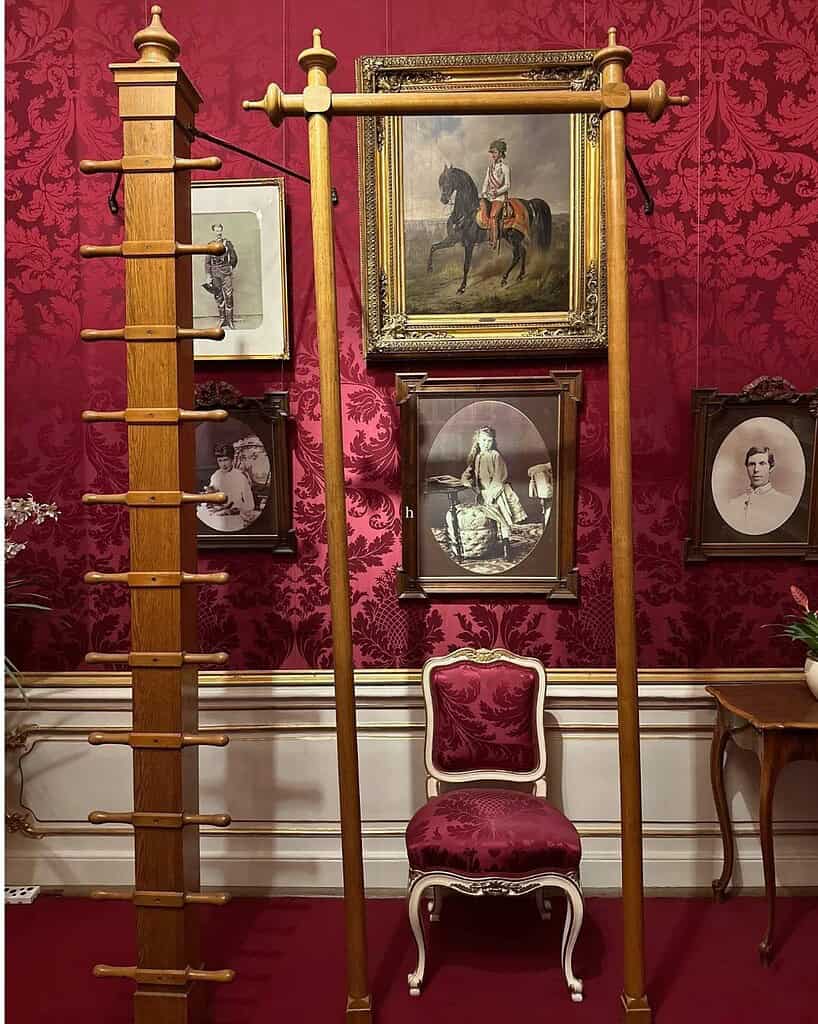
Exercise equipment in Sisi’s chambers at the Hofburg Palace, Vienna. Photo: Catherine Barnes.
So central were dairy products to Sisi’s routine that a private imperial dairy was established at Schönbrunn to supply fresh milk and other dairy products. Lore has it that Sisi personally selected the cows that were brought to Vienna from Inntal and Pinzgau in Austria, Italy, France, Hungary, and Greece. During her frequent trips abroad, sheep and goats were among her traveling companions.
VISITOR INFORMATION
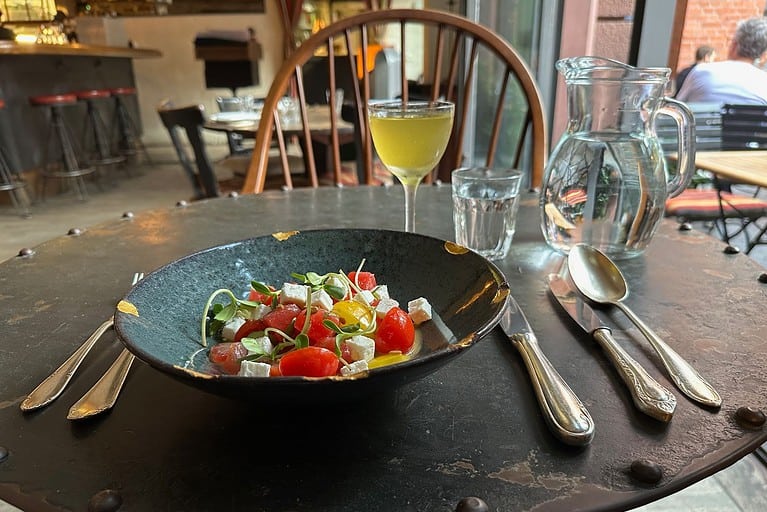
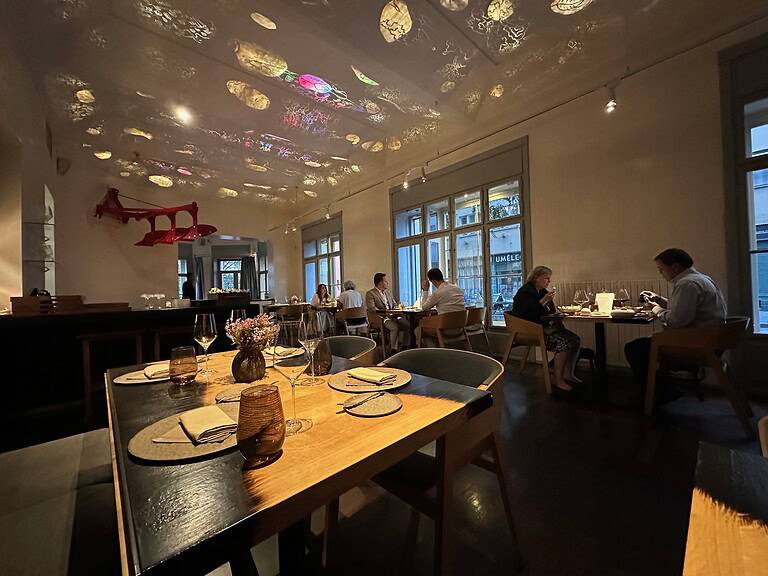
For help choosing where to stay and dine along the way, explore our Grand Addresses Vienna luxury hotel guide and Savoring Vienna fine-dining shortlist.
Unhealthy Behaviors
At 5’8″, Sisi was unusually tall for a woman of her time, and accounts place her weight at around 110 pounds for much of her adult life. Through corseting and her exercise and dietary routines, Sisi reportedly maintained her waist at around 16 inches for most of her life. In the years before her death at the age of 60, her waist remained shy of 20 inches.

Empress Sisi depicted with her scale in an exhibit at the Imperial Furniture Museum, Vienna. Photo: Catherine Barnes.
Scandalously, Sisi was also a chain smoker. smoking as many as 30-40 Russian or Turkish cigarettes a day. While a defiant act of freedom for any woman of the time, much less an empress in the Austrian court, the habit likely also served to suppress her appetite.
Many historians and medical scholars have suggested that her intense preoccupation with weight and food intake aligns with what would today be recognized as anorexia nervosa.
Occasional Indulgences
And yet, despite the restrictions she placed upon herself, Sisi is said to have occasionally indulged in sweets from her court confectioners — especially candied violets. Candied (or “crystallized”) violets are usually made by coating fresh, edible flowers with a thin film of egg white and then sugar, and letting them dry until crisp.
VISITOR INFORMATION
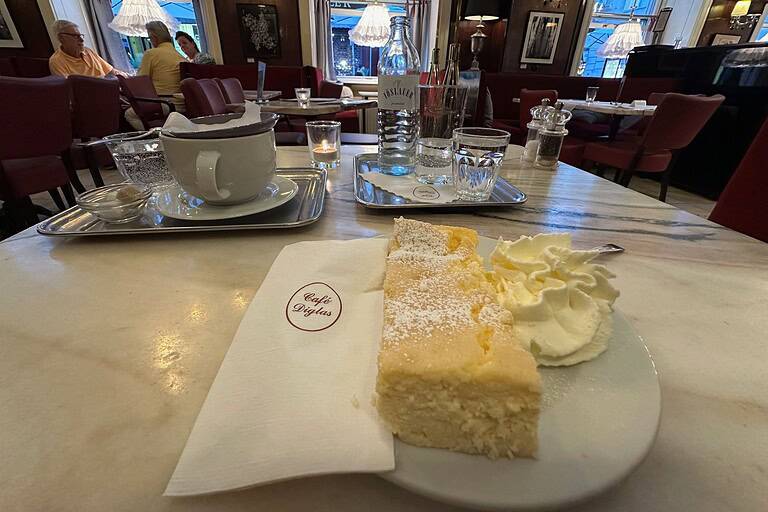
For more on the imperial confectioner designation and the histories behind some of Vienna’s most prestigious pâtisseries and coffeehouses, see our guides on Imperial cafés and Old Town cafés, both part of the Viennese Pause series.
Fashion Sense
Sisi’s overall style reflected a carefully cultivated approach to appearance. While cage crinoline dominated her youth, she was quick to abandon hoop skirts in favor of a more streamlined silhouette, avoiding petticoats and other garments that added bulk. So exacting was the fit of her tailoring that Sisi was often sewn into her clothes to emphasize her tiny waist.
The elongated, body-conscious profiles that accentuated her height and slenderness were often rendered in soft, light-colored fabrics, particularly white, as seen in official portraits. Her evening gowns were frequently adorned with delicate embellishments rather than the heavy ornamentation that characterized much mid-19th-century fashion.
Sisi’s style aesthetic also appears to have been influenced by the tailored structure and close fit of her striking black riding habit. The functional clarity of her equestrian dress, designed for posture, movement, and discipline, finds a clear echo in her everyday style.
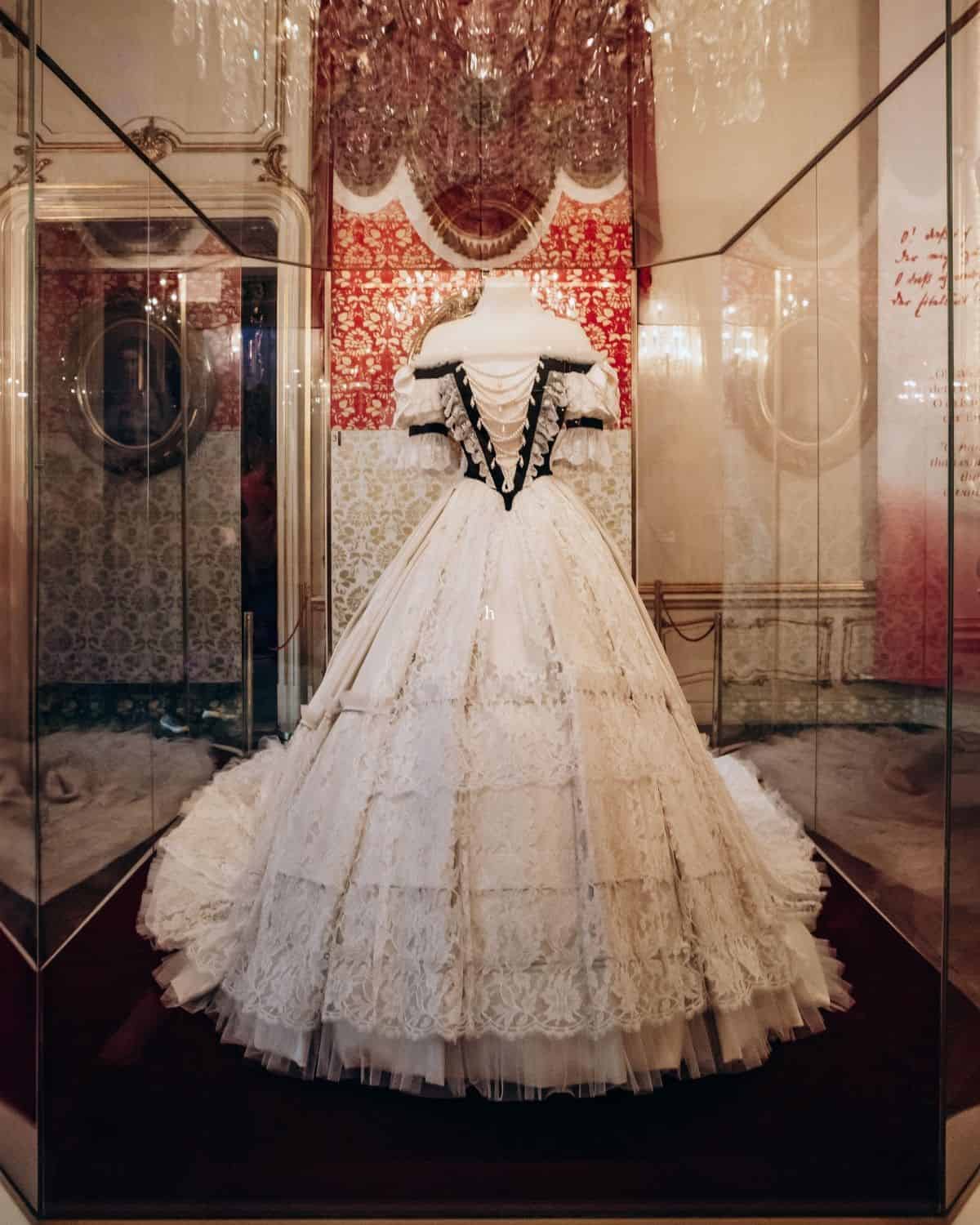
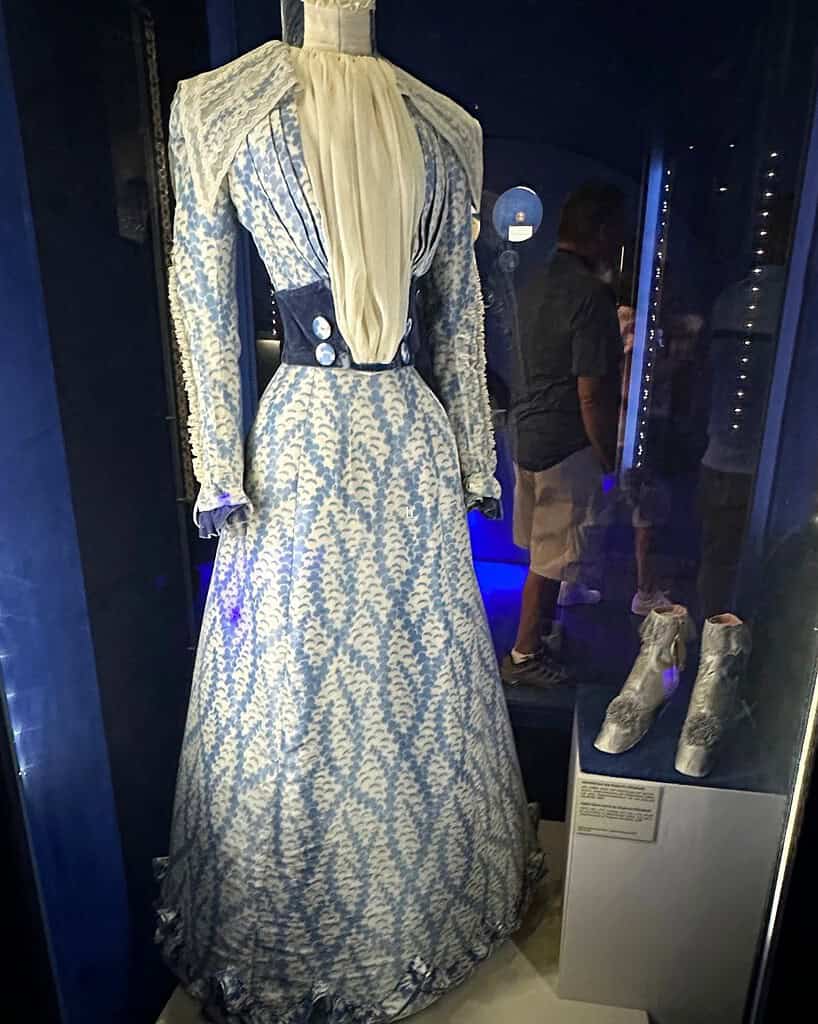
Following her son’s death, Elisabeth’s public image is dominated by black mourning attire. Yet recent discoveries suggest a more nuanced reality. An azure-blue dress associated with her time on Corfu, for example, embraces a distinctly Mediterranean sensibility. This suggests that her apparel in later life, particularly outside Austria, may have been more varied.
Sisi’s wardrobe is known to have been shaped by the Parisian couturier Charles Frederick Worth, the Budapest house Alter & Kiss, and Viennese court dressmakers, most notably Fanny Scheiner, to whom a number of surviving garments are attributed. Many other pieces in imperial collections remain unattributed, reflecting the continued importance of court ateliers and local seamstresses in the mid-19th-century, even as Paris couture began to dominate elite fashion.
In her early 50s, Sisi added one permanent adornment, a physical manifestation of her rebellious nature. On her left shoulder, she got a tattoo of an anchor, symbolizing her love of the sea. According to a later account by her lady-in-waiting Irma Gräfin Sztaray, the empress obtained her ink at a harbor bar while sailing around the Mediterranean.
Sisi: The Muse
In her early years, Sisi’s beauty was captured through formal portraiture, in oil paintings and photographs that can still be viewed today in Vienna’s various palaces and museums. Also an early consumer of photography, she collected photographs, often writing to relatives for photos taken by court photographers. While early fashion periodicals were already in vogue, Sisi quietly curated her own beauty albums, personal scrapbooks of women and their fashions that served as her private style archive.
As she aged, however, Sisi shunned new portraits and photos of herself and, when in public, shielded her face with parasols and fans, essentially freezing her public image at the age captured in Franz Xaver Winterhalter’s famous 1865 portrait and in 1860s photos.
HISTORICAL CONTEXT
How the Sisi Films Rewrote Her (and Austria’s) Story
To see how Sisi’s image as a 19th-century beauty icon and fashion trendsetter was cemented in popular culture, watch the classic Romy Schneider film Sissi (1955). The first of a three-part franchise, the movie recast Sisi as a fairy-tale princess in ways that stripped away much of her complexity.
Schneider’s luminous performance fused the historical Elisabeth and the fictional Sisi into a single, idealized figure defined by youth, beauty, and romantic love rather than politics or inner turmoil. A perennial Christmas staple in the German-speaking world and popular with global audiences, the romanticized screen version of Sisi effectively became the default image of the empress for generations.
The Sisi movie trilogy also drew on the conventions of the post-war Heimatfilm genre, whose idealized rural and historical settings, offering escapism from wartime trauma and reinforcing a sense of continuity, stability, and ‘innocent’ national identity. The genre aligned neatly with Austria’s post-1945 myth of itself as Hitler’s ‘first victim’ rather than a participant in Nazi crimes.
Sources: History Hit, “5 Portrayals of Empress Elisabeth of Austria;” The Maastricht Diplomat, “Geopolitics of Film: The Case of Sissi;” and, The New York Times, “An Empress Ahead Of Her Time Is Having a Pop Culture Moment.”
Sisi: The Polyglot and Poet
During her protracted hairdressing sessions, Sisi became bored. “While my hair is busy, my mind stays idle,” she lamented. To make better use of her time and mind, Sisi dedicated these captive hours to studying languages, including English, French, Hungarian, and modern and ancient Greek.
Political Awakening
An admirer of the German lyric poet Heinrich Heine, she wrote in a similarly sharp, liberal, and anti-clerical vein, filling her private diaries with reflections that cast the monarchy as an outdated form of government. Elisabeth’s liberal attitudes were strikingly radical for a Habsburg empress married to a ruler who embodied dynastic authority, Catholic tradition, and political conservatism.
Heine was not merely a romantic poet. His work belonged to the politically engaged world of Young Germany, challenged religious and political orthodoxy, and was banned by the German Confederation. His ideas later resonated with thinkers including Karl Marx, Friedrich Nietzsche, and Sigmund Freud. Understood within this context, Sisi’s attachment to Heine reflected more than literary taste. It placed her, privately at least, within a provocative tradition of skepticism, social criticism, and resistance to inherited authority.
A Diary Full of Poems
Sisi began composing her own verse under the pseudonym Titania, drawn from Shakespeare’s A Midsummer Night’s Dream. Rather than dissolving the myths around her, the poems present a complex picture of an intellectually alive, politically conscious, and emotionally unsettled woman.
In Titania Shall Not Go Among People, Sisi casts herself as a fairy queen who feels fundamentally misunderstood and exposed before a hostile public. The “people” become an intrusive audience, watching, whispering, and recasting her every action through envy or ridicule. The poem echoes her experience of court life, where individuality was constantly scrutinized and rarely interpreted on its own terms. Her longing to retreat to a realm of “kinder souls” reflects the hope of finding a community in which the private self might be understood and accepted.
In The Seagull, Sisi sketches a self‑portrait as a bird, defined by motion rather than belonging. The image distills her sense of feeling fundamentally untethered — emotionally homeless and most fully herself only when in restless flight, far from the Viennese court and its constraints.
In Abandoned, written in 1886, Sisi directly reckons with her own life. Where Titania laments the absence of belonging and The Seagull dramatizes escape, this poem reveals a compact moral inventory, conceding that constant motion has not brought fulfillment.
Sisi’s private poems were too sensitive to publish in her own time. Instead, she ordered that they be sealed for decades and that any future proceeds go to political prisoners and their families. After languishing in the Swiss Federal Archives for nearly a century, they were finally published in 1984 following a request by historian Brigitte Hamann, with a share of the income directed to the Office of the United Nations High Commissioner for Refugees (UNHCR).
Sisi: The Athlete and Animal Lover
Sisi exercised on wall-mounted bars, ceiling-mounted rings, and other fitness equipment in her chambers and had access to a gymnasium by the Hofburg. The empress also fenced. Rooted in Sisi’s childhood in Bavaria, this athleticism was an entrenched part of her beauty regimen, and, over time, likely served as a form of therapy. Visitors to the Hofburg, Schönbrunn, or Hermesvilla may be surprised to find Sisi’s exercise equipment still intact, offering a stark counterpoint to the gilding, crystal, and brocade.
Extreme Exercise
Her most enduring escape was movement. In Vienna, Sisi was famous for riding hard in the Prater and on the imperial estates, training in dressage and on steeplechase-style courses with an intensity that astonished and alarmed her peers, who called her the finest horsewoman of her age. She also excelled as a hunter, including mounted fox and stag hunts. On days when she was not in the saddle, Sisi walked at a punishing pace for hours through the city’s parks and avenues, covering miles in heavy skirts and insisting that ladies in waiting keep up, as if sheer speed could hold melancholy at bay, if just for a few more hours.
Dog’s Best Friend
The empress also surrounded herself with animals, especially dogs, who were nearly always at her side. In Vienna and on her travels, she favored large breeds, including Irish wolfhounds, mastiffs, and St. Bernards. Contemporary images show her walking, hunting, and even posing for formal portraits with these imposing companions, which quickly became part of her public image as a sporty, outdoorsy empress.

Nineteenth-century portrait of Sisi with one of her beloved wolfhounds. Photo: Original work in the public domain.
VISITOR INFORMATION
If the idea of an itinerary built around a concept and led by place-based storytelling has you intrigued, take a closer look at what our pre-planned itineraries entail.
Sisi: The Mediator
Although she never wielded formal power, Sisi helped to shape the Austro-Hungarian Empire. Accounts and depictions of the empress are preoccupied with her beauty and eccentricities, while her intellectual and political legacy is often overlooked. It may come as a surprise, then, that one of her most consequential roles was inherently political.
A Love Affair with Hungary
Empress Elisabeth was an uncompromising champion of reconciliation between Vienna and Budapest at a time when the Habsburg Empire was under pressure from military and territorial losses in Germany and Italy, and from growing national unrest throughout its lands.
During her first visit to Hungary, Sisi developed a strong affinity for its people, committing herself to learning Hungarian despite opposition at court in Vienna. The Empress built close ties with Hungarian nobles, especially the moderate politician Count Gyula Andrássy, who later became her key adviser and interlocutor.
Working Behind the Scenes
When official negotiations between the two sides stalled, the Empress worked behind the scenes to keep the process moving, pressing Franz Joseph to make concessions and arranging meetings between the monarch and Hungarian leaders. She believed that a successful resolution of the impasse was crucial for Hungary, and for Austria.
Sisi adeptly leveraged her celebrity, charm, linguistic fluency, strategic relationships, and national symbols, conveyed through the purposeful design and styling of the outfits she wore in Hungary, toward a single political objective.
In the process, she became a beloved figure in Hungary, built alliances across factional lines, and used her influence to nudge Hungarian leaders and Franz Joseph himself toward compromise.
Toward a Dual Monarchy
A year before the Austro-Hungarian Compromise of 1867, Sisi gave a speech before the Hungarian Diet (Parliament). Queen Victoria aside, a royal woman speaking in an official capacity was a rarity at the time. More striking still, Sisi delivered her remarks in fluent Hungarian without referring to her notes.
Ultimately, the ‘Compromise,’ as it was known, created the dual monarchy of Austria-Hungary, mollified much of Hungary’s political elite by restoring territorial integrity and real internal autonomy, and gave Budapest a significantly elevated administrative role within the empire. It provided the Habsburg state with renewed stability after military defeat and revolution.
Coronation
In June of that year, Franz Joseph and Elisabeth were officially crowned King and Queen of Hungary in Matthias Church on Budapest’s Castle Hill. Sisi’s coronation gown, which was designed by the famed Parisian couturier Charles Frederick Worth, featured motifs reminiscent of Hungarian folk costume and national colors.
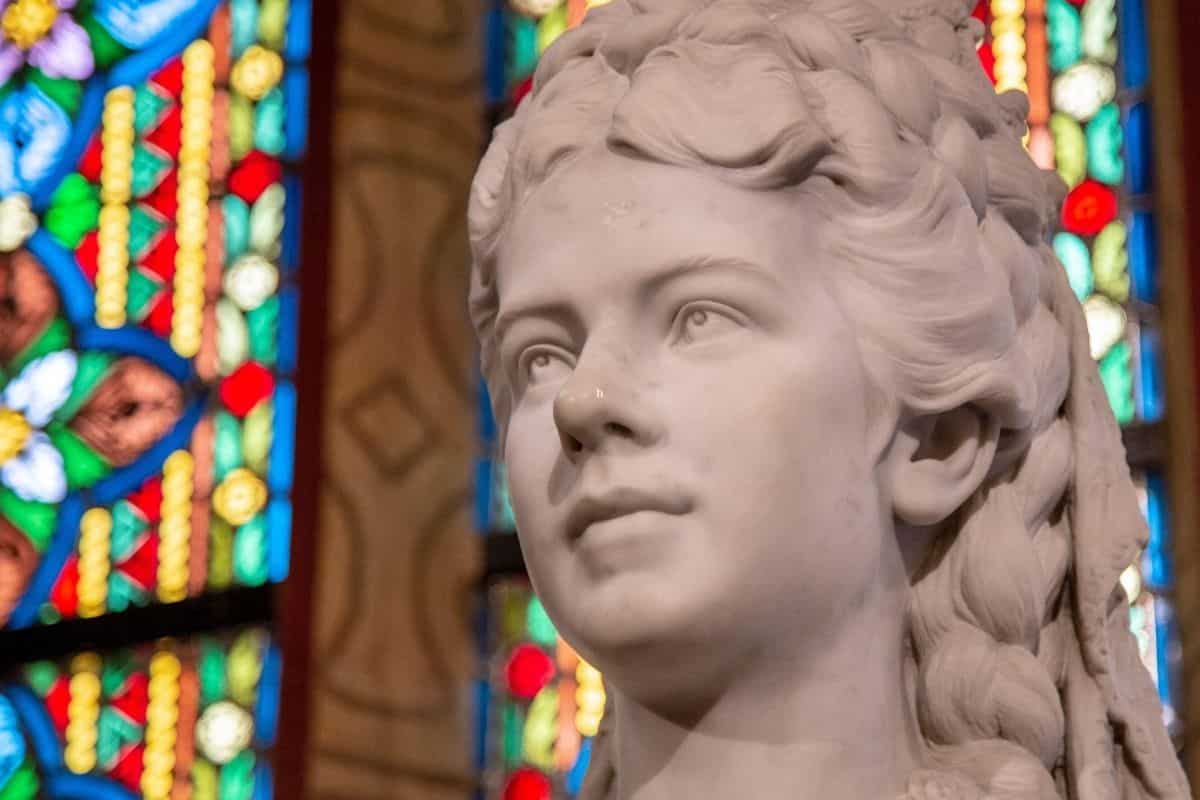
Sculpture of Empress Elisabeth of Austria, Queen of Hungary, in Matthias Church, Budapest. Photo: Ruslan Gilmanshin / Alamy.
Andrássy became the first Hungarian prime minister under the Dual Monarchy, while Hungary presented the royal couple with a country estate in Gödöllő, some 20 miles outside of Budapest, as a coronation gift.
Withdrawal From Politics
The Compromise and coronation proved to be the culmination of Sisi’s engagement with Hungarian affairs. Despite her popularity in Hungary and the successful defusing of the immediate crisis, her open support for Hungarian interests was deeply resented at court. Rebuffed by the emperor, she took no further part in political life.
FURTHER VIEWING AND READING
Sisi: The Wanderer
Unhappy at court, separated from her children by the Archduchess, and suffering from depression and ill-health induced by stress and a poor diet, Sisi was a woman increasingly on the move. She spent considerable time in Hungary, staying at Gödöllő, convalesced at Lake Geneva and Bad Ischl, visited family in Germany, went on riding and hunting excursions with friends in England, and traveled to fashion-forward Paris.
Escape to the Mediterranean and North Africa
As the years passed, Sisi wintered in milder climates, often traveling incognito to dispense with a court entourage and escape the attentions of an adoring and curious public. She sailed throughout the Mediterranean, traveling to the French and Italian Rivieras, to Madeira and to Corfu, where she built the Achilleion Palace. And she explored far-flung destinations not typically found on royal itineraries, most notably Morocco, Algeria, Malta, Turkey, and Egypt.
The Emperor’s Gift
In an attempt to keep Sisi a bit closer to home, Emperor Franz Joseph commissioned a hunting lodge for her in the Vienna Woods. After three years of construction, he gifted his wife Hermesvilla, hoping it would serve as a more proximate retreat.
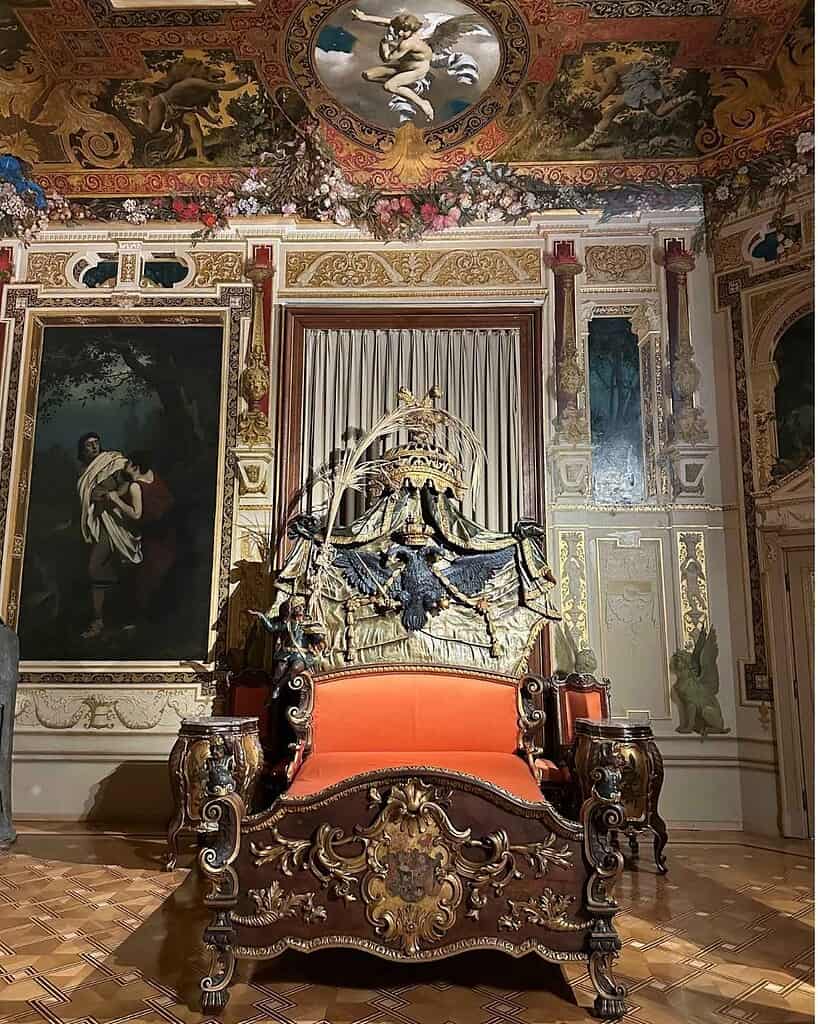
Sisi’s ornate bedroom at Hermesvilla, the hunting lodge in the Vienna Woods gifted to her by Franz Joseph I. Photo: Catherine Barnes.
Clearly a testament to his love for Sisi, the custom-built villa became popularly known as the ‘Palace of Dreams.’ On her first visit, the empress was notably unimpressed. While she returned for short stays almost every year, Hermesvilla never fully suited her. In the end, it never became the true refuge Franz Joseph had imagined.
A Companion for the Emperor
Franz Joseph’s and Sisi’s relationship was complex, beset by differences over the demands of public and domestic life and imperial politics. Still, they eventually settled into an enduring friendship.
To ease the emperor’s loneliness during her long absences, Sisi encouraged his intimate friendship with the actress Katharina Schratt, the first such relationship to receive her effective approval. The empress went so far as to present her husband with a painting of the actress, who, from then on, was known as a “friend” of the imperial couple. Schratt’s companionship eased Franz Joseph’s isolation and, in turn, gave Sisi greater freedom to live on her own terms.
FURTHER VIEWING
Sisi: The Melancholic and Tragic Figure
Compound Losses
In 1889, Sisi’s only son and heir to the imperial throne, Crown Prince Rudolf, killed his mistress, Baroness Mary Vetsera, before taking his own life. At the time, the scandal was delicately referred to as the “Mayerling incident.” Sisi fell into deep mourning, wearing black clothing and a veil for much of her remaining lifetime. And, from that point forward, she spent even more time outside Austria. In quick succession, between 1890 and 1892, Sisi’s sister Helene, her mother, and her advisor Count Gyula Andrássy passed away. Of the latter, she declared, “My last and only friend is dead.”
Coping Mechanisms
Throughout her lifetime, Sisi managed her melancholia through her travels, intensive exercise, what today might be known as therapy animals, and medically-sanctioned substances now recognized as high risk. Contemporary accounts and recent research indicate that Elisabeth received medically supervised cocaine injections for her nerves and carried her own syringe (on display at Vienna’s Sisi Museum). At the time, such ‘modern’ remedies were enthusiastically prescribed by court physicians and touted by medical authorities, like Sigmund Freud.
THE MIND AND ITS MARGINS
Charitable Works and Unsettling Curiosities
Empress Elisabeth’s charitable work often took her far from court ballrooms and into hospitals and psychiatric institutions, which she sought out with unusual persistence for a 19th-century royal. Contemporary accounts and modern historians note that wherever she traveled, she made a point of visiting clinics, charity wards, and asylums, driven by both a curiosity about mental illness and a genuine, if sometimes voyeuristic, concern for the suffering she saw there.
In Elisabeth’s era, psychiatry was still a brutally experimental science. Yet she repeatedly returned to these wards, walking the corridors, speaking with patients, and witnessing conditions firsthand. While difficult to verify conclusively, accounts suggest an interest that mirrored both her own psychological struggles and a broader 19th-century preoccupation with “nervous” disorders.
According to a widely repeated anecdote, popularized on sites like History of Royal Women, Franz Joseph once asked Sisi what gift she most desired. Her retort? “A fully equipped lunatic asylum,” or so the story goes.
Sources: BBC Culture, “Corsage and Empress Elisabeth: The first royal celebrity”; Smithsonian, “The Many Myths of Empress Elisabeth of Austria, the 19th-Century Royal Whose Beauty and Tragic Death Transformed Her Into a Legend”; The Royal Women, “Empress Sisi: Miserable Empress, Beautiful Queen.”
Assassination in Geneva
In 1898, fate came for the empress in Geneva. Traveling incognito, Sisi was assassinated at the age of 60 by Italian anarchist Luigi Lucheni. His original target, the Duke of Orleans, had left the city earlier than expected. When asked about his motive, Lucheni explained,
I am an anarchist by conviction. I came to Geneva to kill a sovereign, with the object of giving an example to those who suffer and those who do nothing to improve their social position. It did not matter to me who the Sovereign was whom I should kill…It was not a woman I struck, but an empress; it was the crown that I had in view.
The irony of being targeted because of an identity to which she did not aspire and which she actively sought to avoid, and under circumstances where she had eschewed any sort of security or formal entourage, makes the tragedy all the more bitter.
The Aftermath
The assassination came as a greater shock even than the Mayerling Incident, and the empire entered a period of public and private mourning. Her funeral cortege to Capuchin Church was accompanied by 82 sovereigns and high-ranking nobles. The coffin originally bore only the inscription “Elisabeth, Empress of Austria.” Incensed, her Hungarian subjects demanded that “and Queen of Hungary” be added. And so it was.

Marble statue of Empress Elisabeth at the Sisi Memorial in Vienna’s Volksgarten. Photo: Peter Schickert/Alamy.
At the time of her death, Sisi had served 44 years on the throne, longer than any other Austrian empress. The assassination cemented her iconic status and has sustained the mythology around her life ever since.
Among the legacies of her death was the establishment of the International Conference of Rome for the Social Defense Against Anarchists, widely recognized as the first international conference against terrorism and an early milestone in international police cooperation.
VISITOR INFORMATION
FURTHER READING AND VIEWING
Want to experience Sisi’s Vienna for yourself?
The Sisi Edit translates the history explored in this article into self-guided cultural journeys through Vienna and Budapest. Choose from a complimentary 3-day Vienna introduction, a deeper 7-day Vienna itinerary, or the forthcoming 10-day Vienna + Budapest journey.
Start the Journey

The Sisi Edit: City Break
3-day itinerary: A concise introduction to Sisi’s Vienna, palaces, cafés, gardens, and key imperial sites, thoughtfully arranged for a meaningful short stay.
The Sisi Edit: Signature Week
7-day itinerary: A deeper exploration of Sisi’s Vienna, pairing iconic landmarks with lesser-known sites, thematic walks, and a more layered cultural arc.

The Sisi Edit: The Grand Tour
10-day itinerary: An immersive exploration of Sisi’s Vienna, followed by Budapest sites connected to her coronation, political role, and favored retreats.
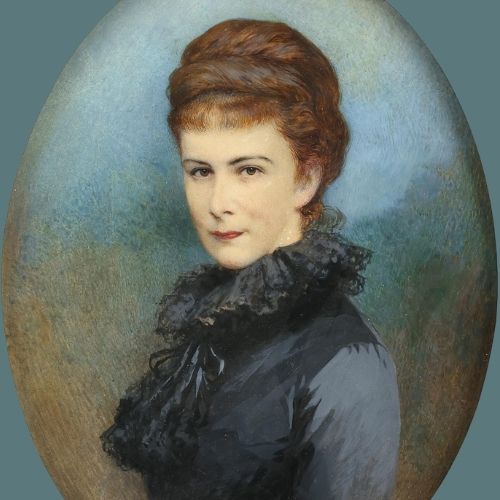
More Fierce Women in History
The Sisi itineraries are the first in a series inspired by remarkable women in history. Sign up for our newsletter to get updates on future releases.
Portrait credits: Public-domain portraits of Empress Elisabeth, sourced via Wikimedia Commons.
Not Sure Which Sisi Itinerary Is Right for You?
Compare the 3-day, 7-day, and 10-day editions by trip length, destinations, and depth of experience and review the details of what each offers.
Looking for a journey designed entirely around your interests? Explore our Bespoke Travel Design services.