Travel Technology: How to Use Tech Mindfully Without Losing the Experience

Flights, hotels, border formalities, walking tours, restaurant reservations, translation, payments, and photography. Almost every touchpoint we encounter as tourists now has a digital counterpart. This article is about the mindful use of travel technology: welcoming tools that genuinely support our travel experience while resisting the temptation to let them quietly overtake it.
This isn’t a technical assessment of the systems behind these tools, nor is it an exhaustive survey. The field is evolving rapidly, and the range of technologies shaping travel continues to expand. My focus is narrower: how ordinary travelers experience these tools, where they add genuine value, and where convenience can introduce new forms of dependence, distraction, or exclusion.

Even in highly digitized transit hubs, travel still depends on a mix of screens, systems, documents, and human judgment.
My Travel Technology Origin Story
Travel technology is now so woven into the way we move through the world that it can be hard to imagine planning or taking a trip without it. But for those of us of a certain age, including this Gen X’er, the technology was once largely limited to the machines you encountered at brick‑and‑mortar travel agencies, airline offices, and the airport, along with the plane that took you over the ocean.
When I first started my career implementing foreign aid projects in the early 1990s, the typical traveler didn’t have cell phones, laptops, Internet, or even digital cameras at their disposal. My destinations in Eastern Europe and the Soviet Union came with their own particular constraints.
International hotels were few and far between, and the most likely lodging would be in an Intourist-run hotel, part of the Soviet state travel agency that handled foreign visitors’ accommodations, translators, local transportation, and excursions, while carefully segregating international guests from locals. International flights were relatively straightforward. Pan Am was the only American airline with landing rights in Moscow at the time. To communicate my itinerary and schedule meetings with local facilitators, I relied heavily on a telex machine.
HISTORICAL CONTEXT
How We Stayed In Touch: Telex Not Texts
Before email, I coordinated with local partners in the USSR via telex. A telex machine looked like a sturdy office typewriter with a built‑in printer and keyboard, roughly the size of a desktop copier, bolted to a desk and wired into the telephone network.
The people I was contacting in the Soviet Union didn’t have direct access to telex machines. Instead, messages arrived at a communications exchange. In Moscow, that was the Central Telegraph Office on Tverskaya. Staff notified the recipient to come in, collect the printout, and dictate a response on the spot.
There was usually a lag of a day or a few between sending a message and receiving a reply. While it was an essential channel for that part of the world at the time, the centralized system facilitated official surveillance.
The communication situation for a foreign traveler upon arrival wasn’t much better. The political situation being what it was, landlines in international hotels were frequently bugged, and international calls had to be reserved in advance both to arrange a line and to give one’s minders an opportunity to eavesdrop.
Given the limited communication technology, it wasn’t unusual for me to be gone for weeks at a time without regularly checking in with the home office. Honestly, not being tethered to devices made those some of the best days of my career and among the most vividly memorable travel experiences of my life.
When technology finally made its way onto my business trips, particularly for important assignments when being out of touch wasn’t an option, it was often bulky, heavy, and expensive. For a time, I lugged around an unwieldy satellite phone, a donated military-grade laptop that was reportedly “indestructible,” large battery packs, voltage converters, and the ubiquitous plug adapters. Even fixed international communications came at a premium. When a major U.S. hotel brand opened a property near Kievsky Train Station in Moscow, it offered a dedicated lobby phone that allowed guests to place international calls by credit card. At $18 per minute, conversations were short.
The Digital Revolution and Travel: A Mind Trip Through Time and Place
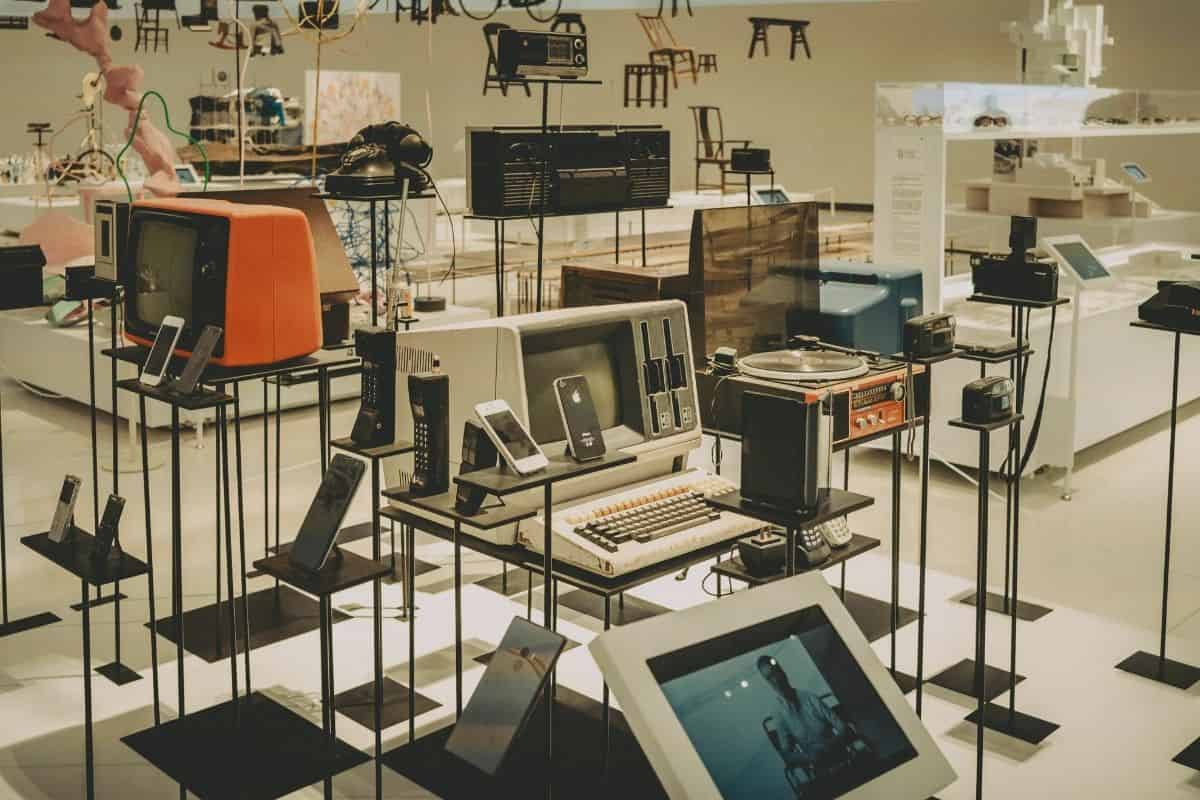
A museum display traces the evolution from bulky analog and early digital devices to the compact technology travelers now carry in their smartphones.
In the past three decades, travel technology has transformed from an occasional logistical aid into a constant companion. In the travel industry, the first big technology revolution was the shift to computerized reservations in the 1960s. The revolution most of us recognize — the one that put travel tech in our own hands — began with the web and online booking in the 1990s, then accelerated with smartphones in the 2000s.
Today, AI and smart‑city infrastructure mark a new phase, where technology doesn’t just help us travel; it increasingly shapes where and how we move and what we experience. I’ve been reflecting on that shift and on what we gained, what we lost in the process, and how we, as travelers, choose to engage with technology when we’re willing to be intentional about it.
I’m not arguing for a full digital detox or pretending we’ll all go back to traveler’s checks and paper maps (as much as I love the latter). Personally, my starting point is positive but skeptical, discerning, and heavily invested in context, judgment, and human connection.
Conceptual Framework for Mindful Travel Tech
In thinking about how I’d translate this view into a conceptual framework that might help guide fellow travelers’ use of technology, five pillars come to the fore:
Technology should support our ability to experience, understand, and navigate a place, not substitute for our own curiosity or judgment.
Technology should inform our decisions, not override them, especially when we know its outputs can be made up, stale, or driven by opaque algorithms.
Technology should deepen our sense of history, culture, and place, not reduce travel to a series of efficient transactions.
Technology should sit in the background of our attention, not take center stage when we’re on the street, in a gallery, at a performance, at a café, or out in nature.
Technology should fit within clear personal and social boundaries, not spill into moments or spaces where it disrupts our own experience or that of others.
Jump to: Technology Before and During the Trip | Technology and the Experience of Place | Smart Cities and the Connected Travel Experience | Mindful Travel Technology Checklist
Travel Tech: The Good, the Bad, and the Imminent
Using this conceptual framework, we can reconsider the main categories of travel technology, not to condemn or celebrate them wholesale, but to understand how they’ve changed our travel experience, where they help, where they quietly hinder, and what’s coming next.

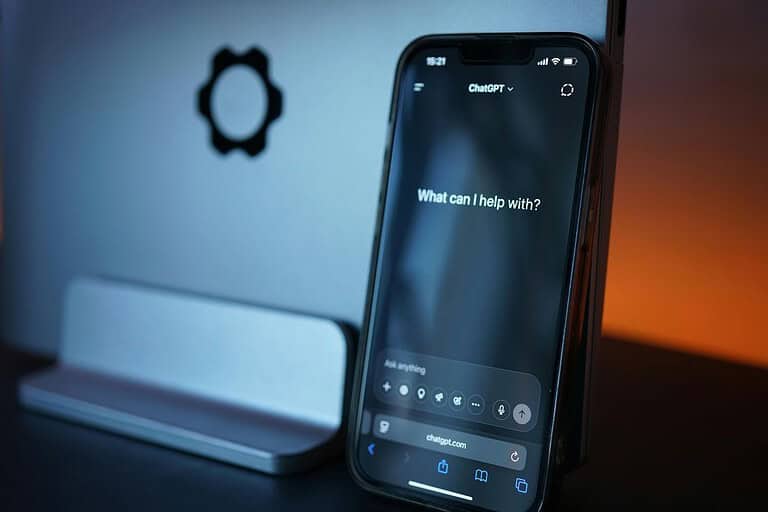
Generative AI tools can help travelers compare destinations, develop basic itineraries, and test different trip-planning scenarios in seconds.
Technology Before and During the Trip
AI and Digital Trip Planning
Meta‑search engines and aggregator sites surface hundreds of flights, hotels, and routes in seconds. Now generative and agentic AI sit on top of these systems, drafting itineraries, summarizing neighborhoods, and proposing daily plans based on a few prompts. According to a September 2025 study by Amadeus, 17% of U.S. travelers said they were consulting generative AI tools such as ChatGPT and Perplexity to source travel ideas.
A YouGov survey from roughly the same period found that 30% of U.S. travelers said they were comfortable using AI for trip planning, while 40% said they were not. Surprisingly, comfort with travel planning had fallen sharply among younger travelers.
BENEFITS
Speed, breadth, and efficiency
The most obvious benefit of generative AI is that travelers can, within a matter of seconds, see and compare many more options than a traditional guidebook or single airline site would expose.
Inspiration and scenario planning
AI planners can also be useful for inspiration and scenario testing, quickly comparing different dates, budgets, or stopovers, without requiring the traveler to repeat the initial research manually.
TRADE-OFFS
Information overload and homogenization
In practice, generative AI doesn’t always resolve information overload. Rather than bringing clarity, it presents a seemingly endless array of “best options” to choose from. The result is too many recommended destinations, itineraries, and sites generated by too many sources, creating decision fatigue that takes some of the joy out of travel planning.
Research into LLM travel recommendations has identified popularity and geographic biases that repeatedly surface the same destinations, hotels, routes, and attractions, reinforcing existing visibility advantages. In the end, recommendations that may feel personalized (and are presented as such) can actually be quite homogenized.
Opacity and bias
Ranking and recommendation logic is rarely transparent. Tech‑policy analyses, like this one from the OECD/G7, note that business incentives, past user data, and commercial relationships often shape what we see at least as much as our stated preferences.
WHAT TO WATCH
More AI tools that act, not just suggest
Travel‑tech forecasts, like the Phocuswright 2026 trends report, expect more tools that will auto‑book, auto‑rebook, and auto‑reroute when flights change, weather shifts, or events pop up. That’s powerful, but it raises real questions about how much control travelers want to relinquish. As AI planning tools gain more access to real‑time data on crowds, weather, and events, trips may become increasingly dynamic and reactive. Some travelers will relish that; others may find that it erodes the pleasure of committing to a plan and living inside it.
For a deeper look at the strengths, limitations, and responsible use of AI in trip planning, check out my article, AI Travel Planning in 2026: Strengths, Blind Spots, and the Human Factor.
Digital Payments, Identity, and Access
Contactless payments, mobile wallets, QR tickets, and digital keys have become increasingly common across European transport and hospitality. What were once separate physical transactions are now often concentrated in a single device, with the traveler’s phone serving as payment method, ticket, booking record, and key. This shift is changing not only how we move through a destination, but also how often we interact with staff, machines, and public systems along the way.
BENEFITS
Friction reduction
Digital payments and tickets mean less fumbling with cash, paperwork, and easily lost hard copies, allowing for more seamless movement through transport hubs, hotels, and museums.
Integration with loyalty and personalization
When done well, digital identity and payment systems can recognize repeat guests, tailor preferences, fast-track processes, and reward loyalty.
TRADE-OFFS
Dependence on infrastructure
Battery failures, app glitches, or network outages can have outsized consequences, including locked entryways or rooms, denied boarding or admission, and delayed border crossings.
Privacy and data consolidation
Centralized identity and payment data raise questions about who sees, stores, and uses travel histories.
WHAT TO WATCH
Biometric and digital IDs at scale
The EU is now accelerating toward biometric verification and shared identity repositories across the Schengen area. While this holds the promise of streamlining movement, it also intensifies the surveillance dimension of travel.
As of April 2026, the Entry/Exit System (EES) has become fully operational at the external borders of participating European countries, replacing routine manual passport stamping for covered travelers with biometric registration (facial images, fingerprints, and automated entry/exit records) for short‑stay non‑EU nationals.

A traveler uses the EU’s newly launched digital border-control system (EES). Photo: Pixsell / Alamy
To help non-EU travelers avoid travel delays, the EU introduced the Travel To Europe app, through which eligible travelers may be able to pre-register certain data.
These aren’t optional conveniences. The infrastructural realities will shape how we enter the EU en route to cities like Vienna, Prague, Budapest, and Berlin.
I explore these topics more thoroughly in Europe’s New Entry/Exit System (EES) and Airport Security: What Travelers Need to Know for 2026-2026.
A traveler uses the EU’s newly launched digital border-control system (EES). Photo: Pixsell / Alamy
To help non-EU travelers avoid travel delays, the EU introduced the Travel To Europe app, through which eligible travelers may be able to pre-register certain data.
These aren’t just optional conveniences; such infrastructural realities will shape how we enter the EU en route to Vienna, Prague, and Budapest.
I explore these topics more thoroughly in Europe’s New Entry/Exit System (EES) and Airport Security: What Travelers Need to Know for 2026-2026.
Translation and Language Tools
Real‑time translation, whether text, camera, or voice, has dramatically lowered the barrier to navigating menus, signage, instructions, and basic conversations, making wayfinding and basic interactions much easier for international visitors. Qualitative interviews with visitors to Budapest, one of The Traveler’s Triptych’s key destinations, found that smartphone tools, particularly Google Translate and Google Maps, were among the technologies used most consistently across generations.
BENEFITS
Ease of getting around and reduced anxiety
In unfamiliar and sometimes complex environments, translation tools can help travelers feel more confident and secure. They also have implications for tourist behavior, including the likelihood of independent travel.
TRADE-OFFS
App‑mediated encounters
When most interactions are filtered through a phone, especially when travelers with at least some language proficiency default to technology, opportunities for more improvised human interactions and “in-the-moment” language exchange can shrink.
Shallow cultural context
Translation tools are optimized for literal comprehension, not for nuance, humility, or the relational aspect of speaking someone’s language.
WHAT TO WATCH
Multimodal translation
Advances in multimodal translation are increasingly combining speech, text, and visual information, allowing systems to use more of the surrounding context when interpreting language.
Synthetic conversation partners
Language apps increasingly offer AI conversation partners that simulate interactions with locals. Examples include Duolingo’s Roleplay scenarios with characters in cafés, shops, and neighborhood settings, or Babbel Speak, which provides an AI conversation partner for hotel check‑ins and everyday chats. While these tools can be helpful for building confidence and functional conversational ability, they are also another step toward practicing with simulations rather than human interlocutors.
Navigation, Mobility, and Accessibility
Popular mapping platforms, transit apps, walking-route tools, micromobility platforms, and turn-by-turn navigation have transformed how travelers move through cities, from finding the fastest route across town to choosing scenic, pedestrian-friendly paths instead of busy roads.
With a few taps, visitors can string together metro lines, tram lines, buses, bike shares, and walkable segments in ways that used to require local knowledge or trial and error.

Turn-by-turn navigation can help with wayfinding in unfamiliar cities, increasing reliance on smartphones.
Navigation, Mobility, and Accessibility
Popular mapping platforms, transit apps, walking-route tools, micromobility platforms, and turn-by-turn navigation have transformed how travelers move through cities, from finding the fastest route to choosing scenic, pedestrian-friendly paths.
Turn-by-turn navigation can help with wayfinding in unfamiliar cities, increasing reliance on smartphones.
With a few taps, visitors can string together metro lines, tram lines, buses, bike shares, and walkable segments in ways that used to require local knowledge or trial and error.
Alongside transit and walking‑route tools, apps like GeoSure overlay neighborhood-level risk scores on a map, drawing on reported crime, harassment, and other safety-related data. For solo travelers, particularly women, these tools can provide additional insights when deciding how to get from A to B.
At the same time, accessibility‑focused routing and mobility apps, like Wheelmap, now help travelers who use wheelchairs, walkers, or other aids identify barrier-free entrances, ramps, elevators, accessible restrooms, curb cuts, and other features of streetscapes and interiors.
BENEFITS
Confidence in unfamiliar cities
Visitors can tackle complex tram networks, metro systems, and pedestrian mazes with much less fear of getting lost or unintentionally wandering into areas they would prefer to avoid.
Access for travelers with disabilities
Where data is robust, information on step‑free routes, ramps, elevators, and accessible venues can contribute to safer and more independent travel.
TRADE-OFFS
Data gaps and false confidence
Accessibility data is often incomplete or outdated. Smart‑tourism case studies warn that when travelers rely on such data, failures can feel like breaches of trust.
Fragmentation and cognitive load
Separate apps for transit, scooters, accessibility, and self-guided walking tours can produce as much screen management as actual navigation.
WHAT TO WATCH
Mainstreaming accessibility data
Across smart‑city and accessibility‑mapping projects in Europe, there’s a clear push to capture detailed accessibility features such as curb cuts, ramps, and step‑free routes. Feeding that information into mainstream mapping platforms and city digital twins could make barrier‑free navigation part of the default map experience rather than a niche add‑on.
Dynamic crowd‑aware routing
As real‑time crowd and congestion data is folded into route and timing suggestions, navigation and travel‑planning tools increasingly steer visitors away from bottlenecks and high‑density squares, public spaces, and streets. In practice, that can mean smoother, less congested movement, but it also risks redirecting travelers away from some everyday local spaces and peak‑time atmospheres that are part of the lived texture of a city.
Jump to: Technology Before and During the Trip | Technology and the Experience of Place | Smart Cities and the Connected Travel Experience | Mindful Travel Technology Checklist
Technology and the Experience of Place
Digital Guides, Immersive Tools, and Human Expertise
GPS-triggered and automatic visitor-positioning audio tours, object-recognition apps, and AR overlays are increasingly turning travelers’ phones into pocket guides, or even time machines. As you move through a city, neighborhood, museum, or historic site, location-aware tools can automatically surface narration tied to the place in front of you, while image-recognition features can identify a façade, painting, monument, or other focal point and retrieve related context and interpretation.
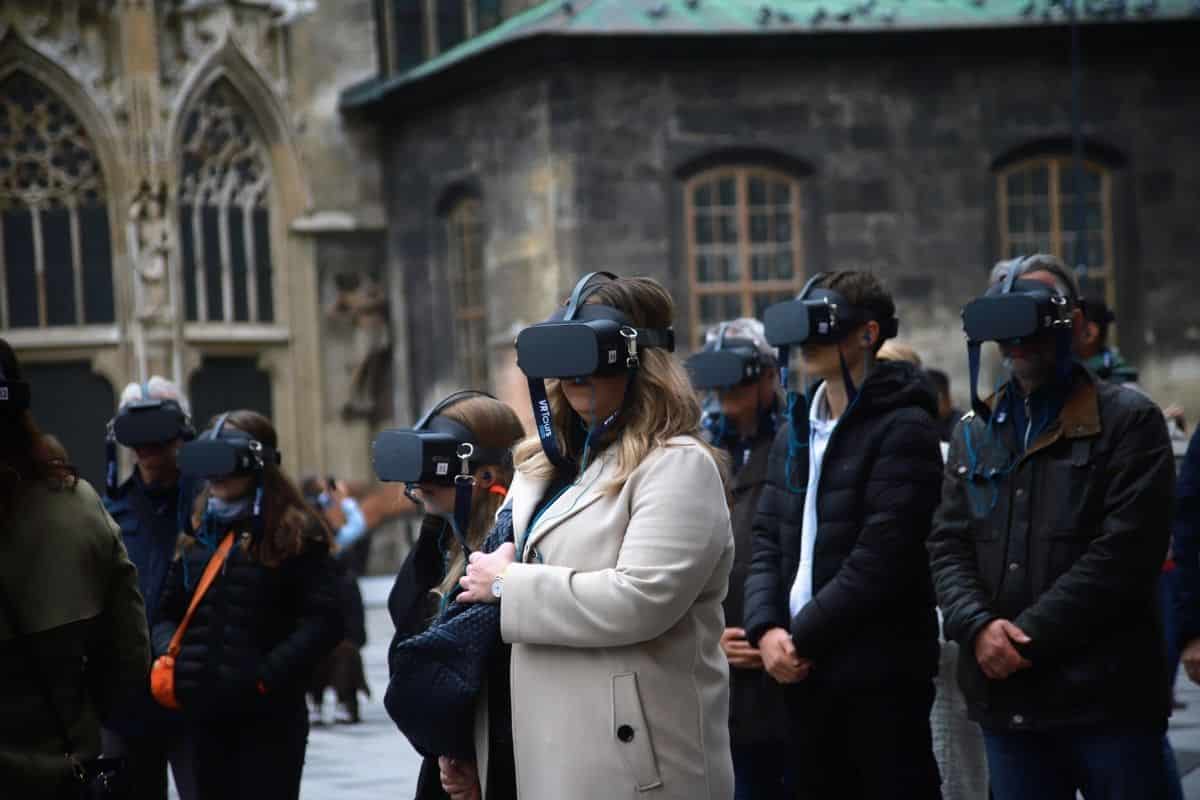
Visitors take part in a virtual reality experience at Stephansplatz in Vienna’s Old Town, using immersive technology to encounter the historic city through a digitally reconstructed or interpretive layer. Photo: Leon Ablinger / Alamy
Augmented-reality overlays can go a step further, layering archival photographs, reconstructed interiors, vanished buildings, or historical scenes onto the present-day view. Instead of consulting a separate guidebook or trying to remember what you read beforehand, travelers can encounter stories, historical images, and suggested routes at the moment when the surrounding place gives them meaning.
Apps such as ArtScan go beyond identifying a painting from a photograph. They can retrieve the title, artist, and contextual information, associate the work with its museum and country, and save each discovery to a personal digital collection. A map feature can then trace those encounters geographically, turning scattered museum visits into a visual record of one’s travels through art. Because the information remains accessible afterward, the experience does not end when you leave the gallery: you can return to the work, search your collection, and recover details that might otherwise disappear into an anonymous camera roll.
BENEFITS
On‑demand interpretation
GPS-triggered audio and automatic positioning allow visitors to move at their own pace rather than follow a fixed group schedule. This can be especially useful for travelers who want to pause, skip stops, revisit material, or structure a walk around their own energy and interests.
Invisible layers revealed
AR can place historical photographs, reconstructions, vanished structures, or earlier streetscapes over the present-day view. In heritage settings, research suggests that this can help visitors expand their understanding of the past and encourage reflection.
Broader access
Digital interpretation can provide audio, enlarged text, multiple languages, transcripts, visual reconstructions, and content beyond what will fit on a gallery label. Recent studies identify public access and accessibility as major benefits of cultural-heritage technology.
TRADE-OFFS
Limited authority, judgment, and exchange
Even a sophisticated digital guide cannot fully reproduce the judgment and responsiveness of a knowledgeable human expert. A guide can prioritize, correct misconceptions, explain why experts or historians disagree, provide richer context, and reshape the discussion around the interests and questions of the people present.
Research on digital heritage also warns that immersive interpretation can overstate, simplify, or even distort meaning when digital presentation becomes more authoritative than the underlying evidence. These concerns support treating AI and immersive technologies as complements to professional interpretation, not substitutes for it, particularly where authenticity, context, and cultural values are at stake.
Adverse impact on local livelihoods
When travelers substitute a low-cost app for a locally led tour, a smaller share of their spending reaches small tour operators, individual guides, historians, artists, or other cultural experts. The result may be economically efficient for the traveler but less beneficial to the destination. It can also flatten local interpretation: instead of hearing how residents understand their own history, visitors receive standardized content produced elsewhere.
Digital displacement of reality
Looking repeatedly through a screen may draw attention away from the actual painting, architecture, or streetscape. The more elaborate the overlay, the greater the risk that the visitor remembers the digital reconstruction more vividly than the original object or place.
Technical limitations
GPS often works poorly indoors, while Bluetooth, Wi-Fi, and other positioning systems can be disrupted by complex layouts, thick walls, signal variation, and differences between devices. Travelers may also encounter rapid battery drain, weak connectivity, large downloads, roaming costs, outdated operating systems, or apps that perform unevenly across platforms.
WHAT TO WATCH
AI‑generated tours and avatars
Emerging platforms continue to experiment with AI-assembled routes, conversational guides, and avatars that can respond to questions and adapt to a traveler’s location, pace, interests, language, and available time. Combined with object recognition, AR, and location-aware storytelling, these tools could make independent exploration more personalized and flexible, although concerns about historical accuracy, bias, privacy, cultural sensitivity, and source transparency remain.
Photography, Journaling, and Memory
Smartphone cameras, video, and cloud storage have made it possible to document trips exhaustively. But constant recording can shift the balance between experiencing a place and digitally capturing it. In an international study of vacationers, travelers who spent more than two hours a day using phones and other devices had more difficulty recalling details of their trips than those who used them less.
Research on smartphone presence similarly finds that high “phone‑conscious thought,” a kind of cognitive preoccupation or “mental pull” toward the device that competes with task‑focused attention, is associated with worse memory recall. And yet, studies of smart technologies and memorable experiences also show that revisiting photos and digital traces can strengthen reminiscence, satisfaction, and a desire to revisit when used reflectively.
BENEFITS
The camera roll as archive
Digital documentation becomes more valuable when photographs are selected, captioned, organized, and revisited. Without that curation, exhaustive capture can produce thousands of images but little engagement with them.
- When curated, photos and videos become visual cues for reminiscence and anchors for post‑trip storytelling and reflection.
- Adding voice notes and written reflections to media can preserve context and support deeper meaning-making.
TRADE-OFFS
Diverted attention
In the moment, attention may be more on framing, filters, and posting than on the scenery, site, art, artifact, or atmosphere, shifting attention from the scene to the screen.
WHAT TO WATCH
AI‑assisted curation and captioning
Tools that auto‑select, tag, and caption photos promise to save time and surface “highlights,” but they also further outsource decisions about what matters and, at least in part, offload memories from our brains to our devices.

Smartphones make it easy to document iconic sights, but constant framing and capture shift attention from the place itself to the screen.
TRADE-OFFS
Diverted attention
In the moment, attention may be more on framing, filters, and posting than on the scenery, site, art, artifact, or atmosphere, shifting attention from the scene to the screen.
WHAT TO WATCH
AI‑assisted curation and captioning
Smartphones make it easy to document iconic sights, but constant framing and capture shift attention from the place itself to the screen.
Tools that auto‑select, tag, and caption photos promise to save time and surface “highlights,” but they also further outsource decisions about what matters and, at least in part, offload memories from our brains to our devices.
Jump to: Technology Before and During the Trip | Technology and the Experience of Place | Smart Cities and the Connected Travel Experience | Mindful Travel Technology Checklist
Smart Cities and Traveler Experience
To this point, we’ve focused primarily on platforms, apps, and other digital technologies, and their growing integration. At the city level, smart cities use digital infrastructure, shared data, and connected public services to make urban life more efficient, accessible, and sustainable. For travelers, that can mean real-time public transport information, digital tickets and city passes, multilingual visitor services, contactless hotel systems, accessible route planning, and timely information about closures, congestion, weather, or events.
Behind the scenes, cities can also use aggregated or anonymized mobility, spending, and visitor-flow data to understand where travelers go, identify pressure points, and encourage exploration beyond the most crowded districts. The most successful systems aren’t simply collections of gadgets. They connect technology with transport, cultural institutions, tourism businesses, sustainability goals, and local residents’ needs.

Digital ticketing and automated kiosks can make public transport more seamless when the technology is well-designed, functional, and has clear on-site support.
BENEFITS
Seamless journeys
When systems work together, travelers can move among transport services, ticketing systems, attractions, city passes, and accessibility information with fewer separate transactions and platforms.
BudapestGO, for example, provides real-time journey planning and digital ticketing in one official platform; by early 2025, Budapest’s transport authority reported three million registered users and seven million downloads.
Digital ticketing and automated kiosks can streamline public transport when systems are reliable and clear on-site support is available.
BENEFITS
Seamless journeys
When systems work together, travelers can move among transport services, ticketing systems, attractions, city passes, and accessibility information with fewer separate transactions and platforms.
BudapestGO, for example, provides real-time journey planning and digital ticketing in one official platform; by early 2025, Budapest’s transport authority reported three million registered users and seven million downloads.
Responsive destination and visitor-flow management
Aggregated transport, location, booking, and spending data can help cities identify overcrowding and encourage visitors toward less congested times or neighborhoods. Vienna’s current visitor-economy strategy includes targeted analysis of day visitors and visitor flows through its Sustainable Tourism Observatory. In 2026, Prague City Tourism and CzechTourism announced that they would use behavioral and economic data to understand visitor patterns and respond more quickly to changing trends.
Greater accessibility
Coordinated digital wayfinding, step-free route information, audio description, multilingual content, and real-time service alerts can make an entire destination easier to navigate for travelers with mobility, sensory, or language needs.
More sustainable choices
Smart systems can make public transport, walking, cycling, and lower-impact attractions easier to find and use. They can also help destinations monitor tourism’s effects on congestion, resources, and residents rather than measuring success only through arrival numbers.
TRADE-OFFS
At a city level, the privacy, accessibility, and dependence on connected systems discussed above become cumulative rather than isolated. Several additional trade-offs also emerge when services, data, and decision-making are integrated across an entire destination.
Too many disconnected systems
A supposedly smart destination can still require separate apps for transportation, museums, city passes, hotels, restaurants, and individual attractions. Unless systems are interoperable, digital convenience can become another layer of planning, account management, and app juggling.
Algorithmic steering
Personalized recommendations may help distribute visitors, but they can also quietly determine which neighborhoods, attractions, restaurants, and businesses receive attention. Smaller establishments that are poorly represented in destination databases may become less visible.
Efficiency over experience
Visitor-flow dashboards and predictive systems can help manage tourism, but not everything of value can be reduced to efficiency, movement, or spending. Overreliance on data risks overlooking serendipity, atmosphere, local relationships, and the interests of residents whose behavior is less easily quantified.
Poor design, inadequate human backup
Smart systems are only as useful as their design and support. Confusing navigation, inaccessible interfaces, poor translations, and systems that assume every traveler has a compatible smartphone, reliable mobile data, and strong digital confidence can quickly turn convenience into frustration. When a transport pass won’t activate, a hotel’s digital key fails, or an accessibility feature doesn’t work as promised, travelers need a clear route to knowledgeable human assistance rather than another chatbot or rigid automated workflow.
I encountered this firsthand during a recent stay at a smart hotel in Prague. The historic building had character, the room was spacious and beautifully designed, and the central location could not have been better. But upon arrival, when the building and room access codes didn’t arrive promptly and the promised human assistance was slow to respond, the convenience of self-check-in quickly gave way to uncertainty and stress.
This experience resurfaced recently when I came across an intriguing cluster of smart hotels in Vienna that aligned well with the travel concept I was designing. Ultimately, the fit wasn’t right for my clients. Contactless technology may appeal in theory, but for many Gen X and Boomer travelers, particularly those seeking a premium experience, minimal staffing can feel less like innovation and more like a reduction in service.
When technology is poorly implemented or under-explained, guests feel disconnected both from staff and from their surroundings.
“Making Tourism Technology User‑Friendly: From Problems to Positive Experiences,” by Philip L. Pearce & Hera Oktadiana, in Delivering Tourism Intelligence: From Analysis to Action (Emerald, Bridging Tourism Theory and Practice, Vol. 11).
WHAT TO WATCH
The European Commission’s recent reports on smart-tourism best practices, together with its wider work on digital urban development and tourism data, point to several developments and questions to watch:
Emerging city-based AI assistants
Future destination platforms may combine transport, cultural information, reservations, accessibility, and real-time disruption alerts in a single conversational interface.
Growing use of predictive visitor management
Cities may increasingly anticipate crowding rather than simply respond to it, using live and historical data to recommend different routes, times, or districts.
Digital twins
Detailed virtual models of streets, buildings, transport networks, and visitor movement could help cities test crowd-management, accessibility, and climate responses before making changes that affect residents and visitors.
Movement toward more integrated urban ecosystems
Digital tickets, public transport, cultural admission, hotel services, and visitor information may gradually converge into interoperable city wallets or passes. Berlin, for example, moved in this direction in late 2025 with a digital Berlin WelcomeCard app, while its tourism organization is now exploring a “Sentient City” model intended to use technology to improve both the visitor experience and urban development.
Greater scrutiny
The central question won’t be whether cities can collect and connect more data, but who controls it, how transparent the systems are, and whether smart-tourism investments benefit residents, local businesses, and cultural institutions as well as visitors.
Jump to: Technology Before and During the Trip | Technology and the Experience of Place | Smart Cities and the Connected Travel Experience | Mindful Travel Technology Checklist
Putting the Pillars Into Practice: A Mindful Travel Technology Checklist
Before relying on a tool, ask whether it deepens your understanding of a place and enriches your journey, or merely makes the process faster.

Mindful travel technology isn’t about rejecting digital tools, but about using them deliberately so they support the journey without overtaking it.
Support, Not Substitution
Trust, but Verify
Context, Not Just Convenience
Presence First, Tech Second
Intentional Boundaries and Respect
As tourists, we will each draw these lines differently. Generational habits, comfort with technology, and personal travel styles all matter. Having traveled before digital tools became constant companions, I value what they make easier while remaining conscious of what can be lost when they command too much of our attention.
Ultimately, we all have the opportunity to design hybrid travel: journeys in which smart tools and human experiences are consciously blended, and technology remains the supporting act rather than the star of the show.