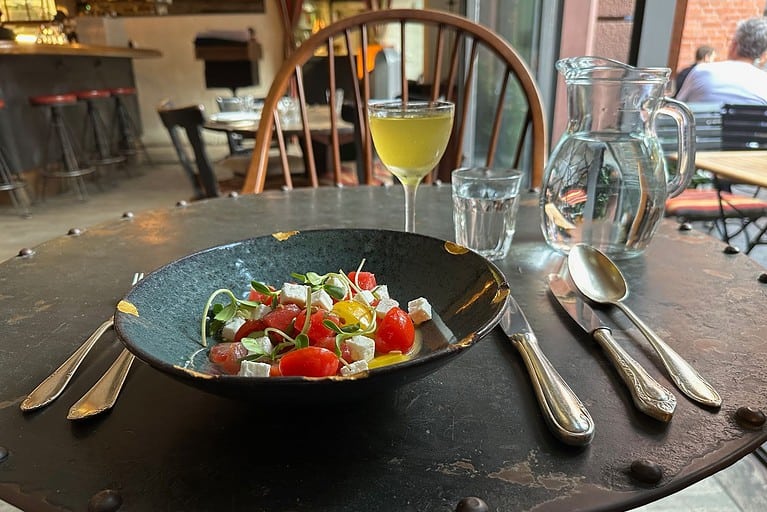
Inside the Kunsthistorisches Museum: A Conversation with Sabine Haag

Former Kunsthistorisches Museum (KHM) Director General Sabine Haag shares her perspective on Vienna’s extraordinary museums, imperial collections, cultural traditions, and the experiences that help visitors engage more deeply with the city’s art and history.
When my husband was asked to be the Ambassador to Austria, I viewed the opportunity as a much-needed adventure. During those four years, I grew to love Austria, its lifestyle, and our friends. My husband and I maintain a residence in Vienna and spend several months a year in Austria. This column is an opportunity to share my love for the city with a wider audience.
Dr. Sabine Haag was the Director General of the Kunsthistorisches Museum (KHM) from 2009 to 2024. She produced many wonderful, widely acclaimed exhibitions, drew record numbers of visitors, and left the institution in a solid financial position.
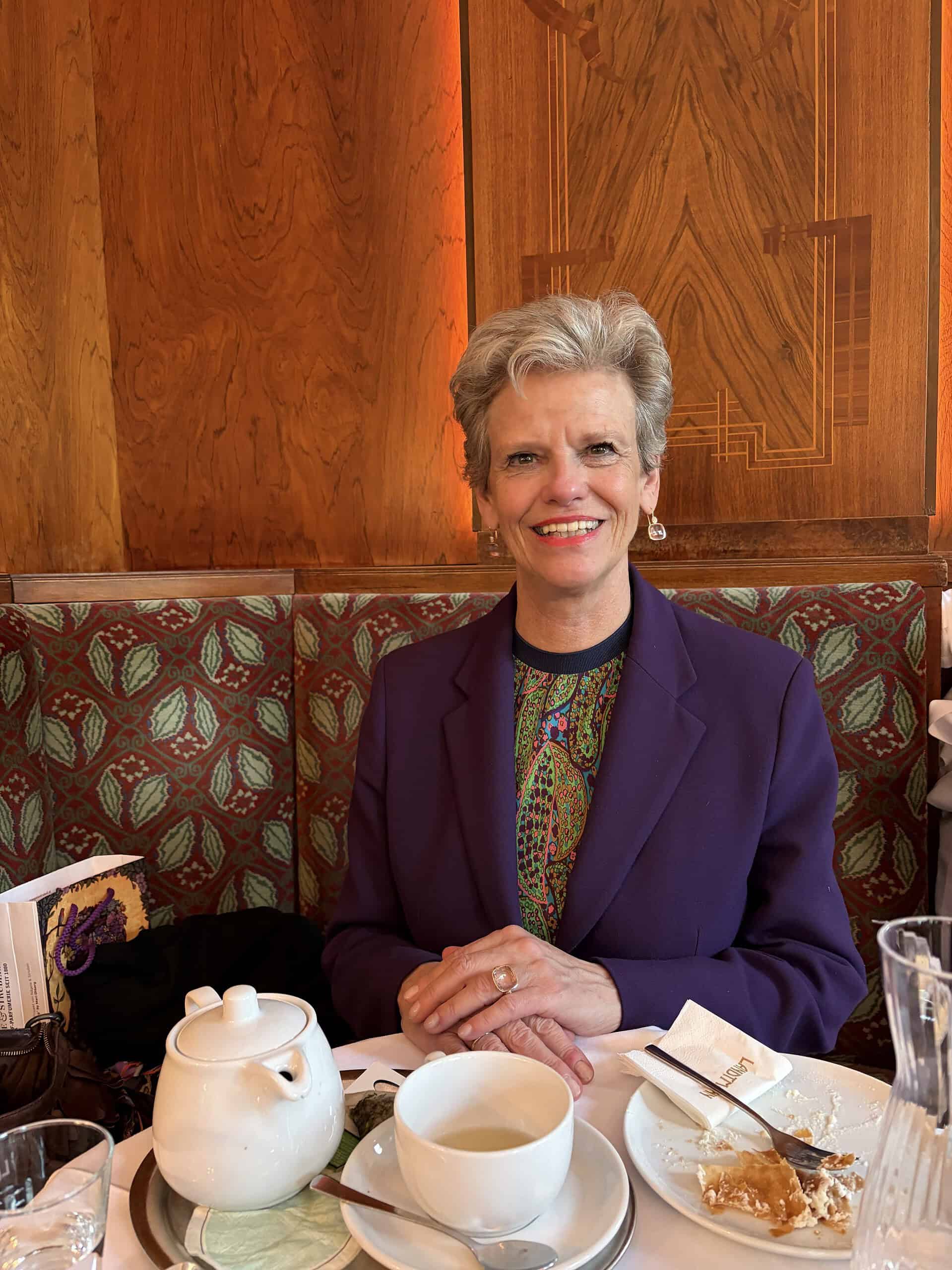
A conversation with Dr. Sabine Haag, former Director General of the Kunsthistorisches Museum, at Café Landtmann.
We originally met in our official capacities: The U.S. Embassy is a key point of contact between major museums in Austria and the United States. With many mutual friends, I have been lucky to maintain a warm relationship with Sabine over the years.
For this interview, we talked about her love for the KHM, art, and Vienna over coffee, tea, and strudel at Café Landtmann.
Running one of Europe’s Great Museums
Sabine, congratulations on your wonderfully successful tenure as Director General of the Kunsthistorisches Museum.
Thank you so much!
Was it a fun job?
Yes, it was a fun job. I mean, not every day. We did have hardships, especially with COVID, but basically, I have to say, I really loved my job. I worked at the Kunsthistorisches Museum starting in 1990. I was a curator at the Kunstkammer and the treasuries and then Head of Collections. And then in 2009, I became Director General, a position that I never dreamt of.
The Kunsthistorisches Museum is not only the most important museum in Austria, but it’s also one of the leading museums worldwide. So, it was a fun job, plus it was much more diverse than you would think, because normally you think, what does a director do in a museum? Really, it’s a management job. We had about 780 staff, seven locations in Vienna plus Ambras Castle near Innsbruck with a variety of collections and academic fields, visitors, collaborations, media, and, of course, you have to constantly think about innovation.
Especially as your collection is fairly static. I mean, you’re not acquiring…you are working with what you have.
Exactly. We don’t acquire much; we don’t have an acquisition fund like many American museums do. So the collections are fairly static, but they’re amongst the best in the world, because they are the former imperial collections. The Habsburgs were probably the most important dynasty in Europe for a long, long time, also reaching out to the far continents, and they always defined their power by collecting art as a means of showing their power. So, they always had the best artists in their collections, but also the best of their works.
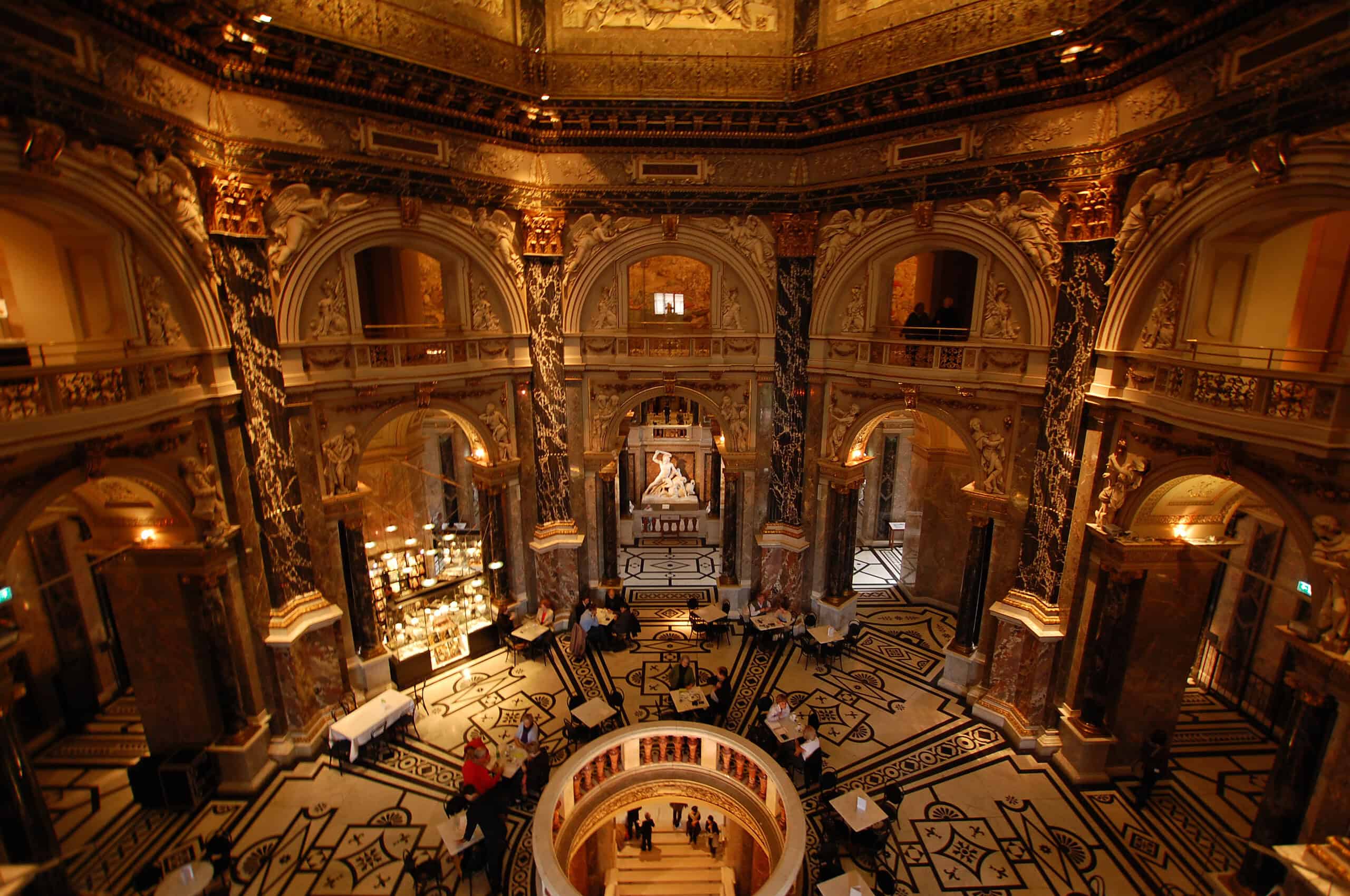
The grand rotunda hall of the Kunsthistorisches Museum, Vienna. Public domain via Wikimedia Commons.
The building which houses the collections was opened in 1891 by the Emperor himself, and it was built to contain an art collection. And it’s still used as a museum. And this is why the building forms an entity: architecture, interior decoration, and the collection. In modern words, you would probably say it’s an immersive experience.
How to visit the kunsthistorisches Museum
So, for a thoughtful visitor coming to Vienna, maybe for the first time, the Kunsthistorisches is very vast and diverse, with all these affiliated museums. Do you have any tips for planning your time? It can be overwhelming.
I would always recommend you start out with the main building. When you go into the building, you’re overwhelmed by just the architecture, the interior decoration…then you walk up the main stair; it’s like an opera… like a drama when you come in, and then the more you go into the building, the more it’s fascinating. It’s overwhelming. And then you go in the cupola hall, and this is “wow!” And this is the same floor where you have the paintings. Everyone wants to go to see the paintings first, because we have the best Bruegel collection of twelve (paintings).
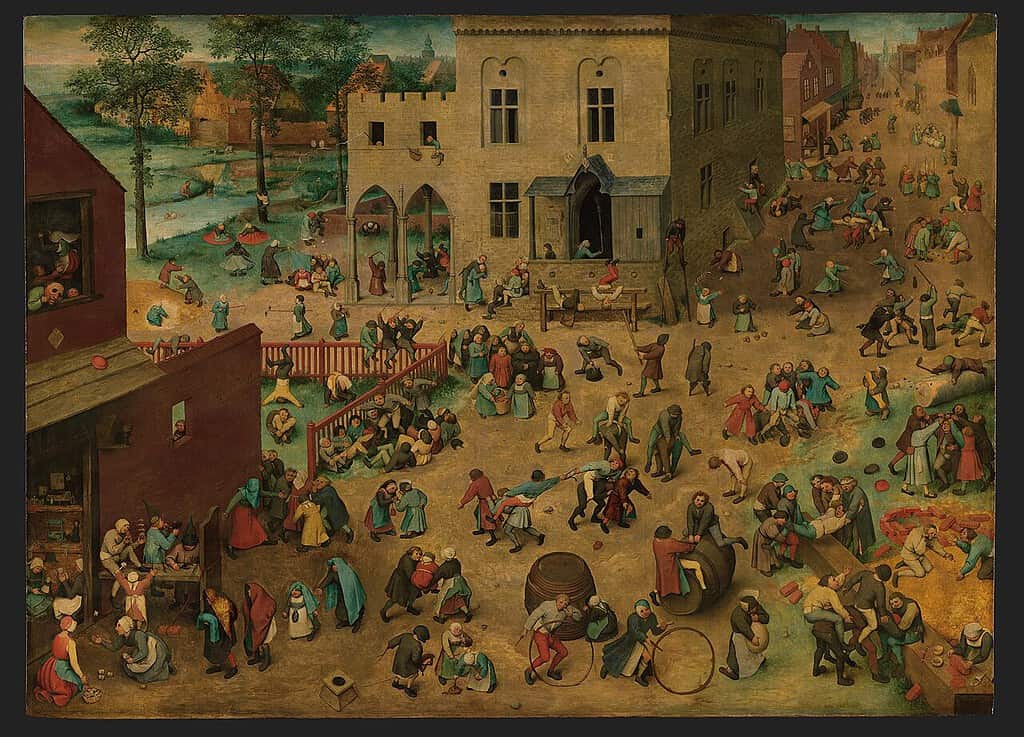
Pieter Bruegel the Elder, Children’s Games, 1560. Kunsthistorisches Museum, Vienna. Public domain, via Wikimedia Commons.
Oh, my goodness, that room!
But we also have a fantastic collection of Italian Renaissance paintings, of Titian, Tintoretto, Giorgione, and so on. And just walk through the galleries. Maybe book a tour, which I recommend.
You should not miss the Kunstkammer collection, because it’s the most important collection of its kind. It became famous for the Cellini (the Saliera), which is the famous vessel to contain salt and pepper, which was made for the French king, and then had a very interesting story. It’s a beautiful work of art which even became more famous when it was stolen in 2003.
Wasn’t it hidden in the woods, somewhere?
Yes, yes, that was such a strange story, really. Fortunately, two and a half years later, it came back almost undamaged, which was really a miracle. I was the one called; the Director General at that time was away from Vienna when it was stolen. He was not here when it came back. And so, I was always called, “Please come to the museum.”
First, when it was stolen, I really had tears running across my cheeks because that was so sad. And then I was also called when it was found; they said, “You have to unpack it and authenticate it.” And that was very, very emotional. And the third emotional moment, for me, was when we did the reinstallation of the Kunstkammer, which was “my ‘baby,’ my project.” I said, “I’m the one who would put the Saliera back into the final showcase where it will stay forever.” So, these are really the three most emotional moments for me in the museum.
Dr. Sabine Haag
I encourage people when they come to the museum to follow your curiosity, follow your open eyes, but also follow your open heart. Just dive in and let your emotions speak. Try to find a connection to the work of art.
I encourage people when they come to the museum to follow your curiosity, follow your open eyes, but also follow your open heart. Just dive in and let your emotions speak. Try to find a connection to the work of art. It’s not so much about knowledge. It’s helpful, of course, if you know something about the artist, if you know something about the topic, what is depicted.
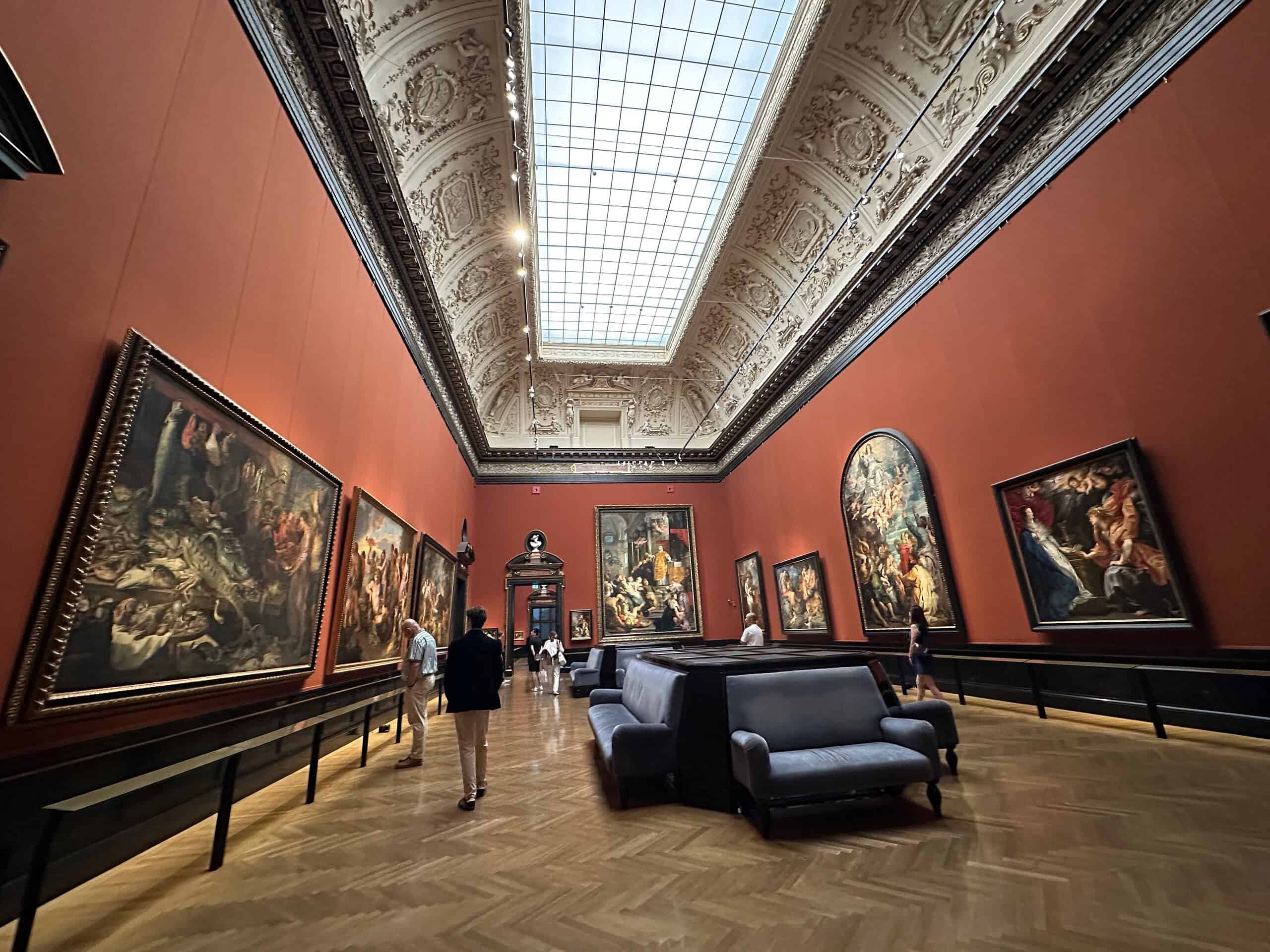
Visitors explore one of the painting galleries at the Kunsthistorisches Museum, Vienna. Photo: Catherine Barnes.
I think it’s so important that you can connect, that something moves you. For whatever reason. You know, you might be very happy, you might be in love, you might have just lost someone, you might be very unhappy because love doesn’t work out. You might see some pictures of mythology, telling something that you can relate to. It might be just the colors; it might just be the atmosphere that a painting is able to arouse in you. And that’s the wonderful thing.
What Not to Miss
I often wonder, because you’re so familiar with all the objects. Are there any works that you feel are often overlooked by visitors, but that you think are important or particularly intriguing?
Yes, of course. The museum is so full of highlights and important works of art. But there are also collections or objects in the collections that not everyone goes to see, because they only have limited time.
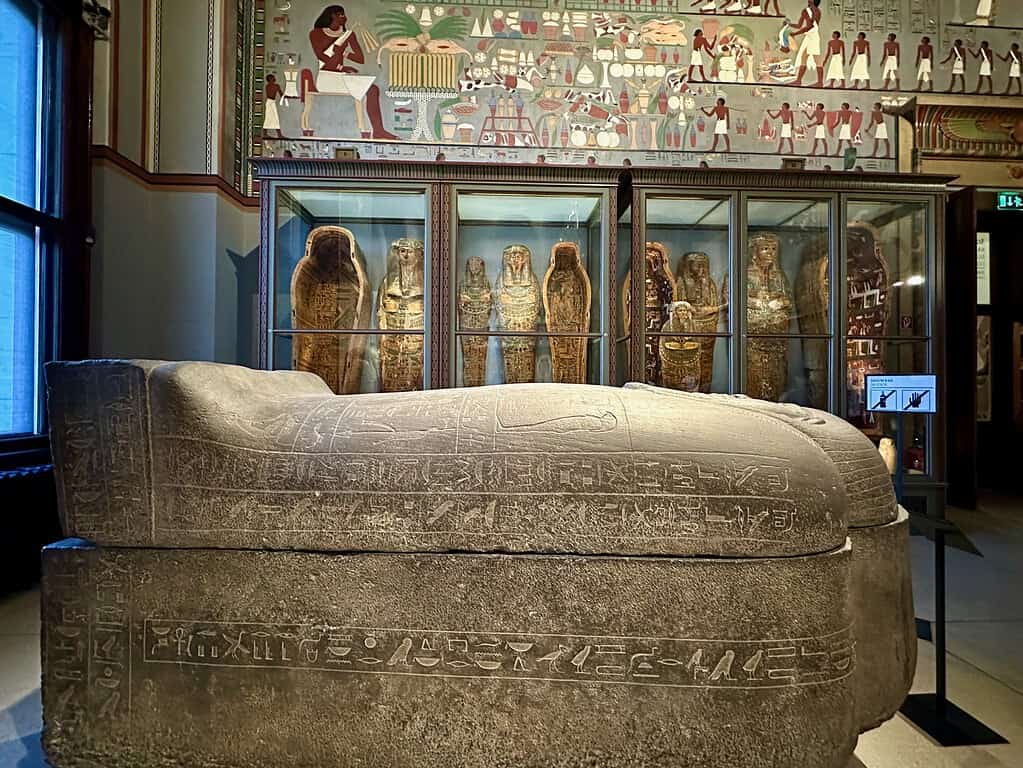
Inside the Egyptian and Near Eastern Collection at the Kunsthistorisches Museum, Vienna. Photo: Catherine Barnes.
You have to go into the Egyptian art collection, not primarily for the objects, but because the first two rooms are decorated in the Egyptian style. So you really dive into authentic Egypt, because you have authentic Egyptian objects, but you also have the columns that were given as a gift to the Emperor while the museum was still being erected. The walls are covered by depictions from an Egyptian grave. And they really give you an insight into life in ancient Egypt.
Then you continue, and you walk through the Greek and Roman antiquities, and the star object is so unique, but it’s small. It’s the Gemma Augustea. It’s a cameo carved into sardonyx, which is an antique stone. And you see an antique scene: Emperor Augustus being coronated. It’s in many colors, but the colors are within the stone.
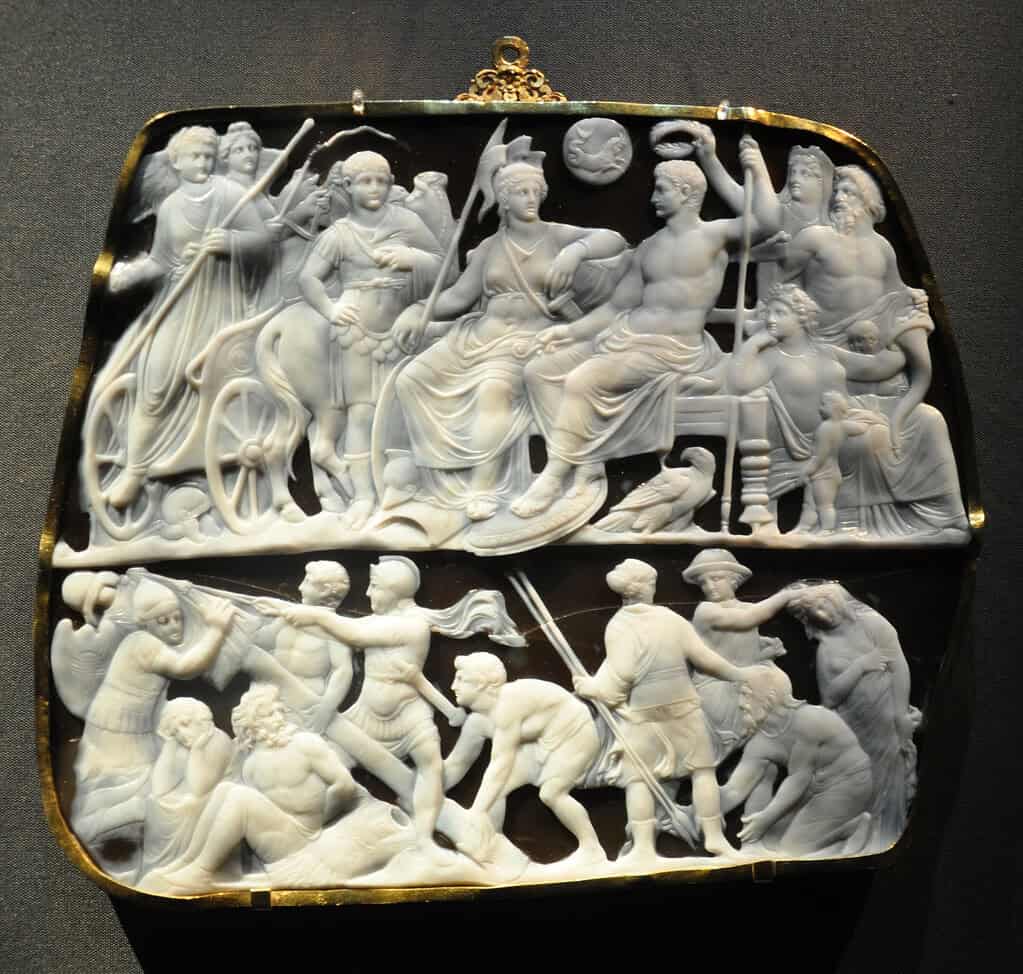
The Gemma Augustea, a Roman sardonyx cameo depicting Emperor Augustus and other allegorical figures, at the Kunsthistorisches Museum in Vienna. Photo: Andreas Praefcke / Wikimedia Commons, public domain.
It’s the most incredible item. And if I had not been on a tour, where somebody pointed it out and explained it, I would have never found it, and it’s amazing.
It is amazing. It’s the largest cameo in the world. Not broken, it’s intact. It’s incredible. And it came into the Habsburg collections via Rudolf II, one of the imperial collectors who lived in Prague. He had such an understanding of the complexity of good art, not only of the materials but also of the techniques and the intellectual background.
After the Greek and Roman collections, you come into the Kunstkammer and of course, you have to see the Saliera – such a unique piece. It is the most important piece of goldsmith work in the collection from the Renaissance. So, it’s really very special. And this one room tells so much about the history of collecting: It’s a collection of a dynasty, of collectors that knew so much about art. They spent so much money; they had their agents all over Europe and said: “Please, bring me the best. I want to have it in my collection, because I’m the Emperor of the Holy Roman Empire, and my art collection must show my importance and political purpose.”
I am a specialist in ivory sculptures, and we have the best collection in the world of objects made from ivory, from the tusk of an elephant. There is one piece that really stuns everyone – it shows Apollo and Daphne.
For everyone who has been to the Galleria Borghese in Rome, you have seen the Bernini marble, the large-scale sculpture. And here, we have the miniature: when Apollo catches Daphne, the nymph, and he’s so much in love with her, but she doesn’t want to even be touched by him. He catches her, and she turns into a laurel tree. And this, in ivory, made from one piece, and still in such a perfect condition. It used to be one of the highlights for visitors on the Grand Tour in the Baroque times.
Beyond the Main Museum
The main art museum is just one of eight museums. Of the lesser-visited museums, what are some of the things that you think are worth seeking out?
If you cross the Ringstrasse from the main building, you enter the complex of the Neue Hofburg, which was part of the Imperial residence, where there are some important collections of the Kunsthistorisches Museum. The historic musical instruments, which are amazing in the city of Vienna, the city of music. But, for my taste, even more important and stunning is the collection of arms and armor.
I agree. And that is displayed beautifully.
It is so overwhelming. Because it’s like a genealogy in steel. And I always say, it’s haute couture for men. We know for almost every single piece of armor who it was made for, by whom it was worn, and for what occasion. Most of those arms and armors were not made for warfare, but they were made for representation. Ceremonial haute couture. And, of course, they were done beautifully. They cost, like a car for Formula One nowadays would cost, you know, so really, really expensive. Made in a very refined way.
You learn so much about: How do you want to represent yourself? And, of course, for the ladies, it used to be beautiful clothes. It used to be jewelry. And for the men, it was arms and armor. And our arms and armor collection is important not only because it’s the largest and the oldest, but also the best documented in the world.
I love it. I really love it.
Understanding Vienna
Thinking about Vienna, what do you wish thoughtful visitors understood about the city?
Well, I think you immediately sense that Vienna used to be an imperial residence. A city full of grandeur. In the center is St. Stephen’s Cathedral. Austria still is, but for many centuries it was dominated by the Catholic faith, and the rivalry between worldly powers and ecclesiastical powers. And this, of course, you sense when you walk through the city.
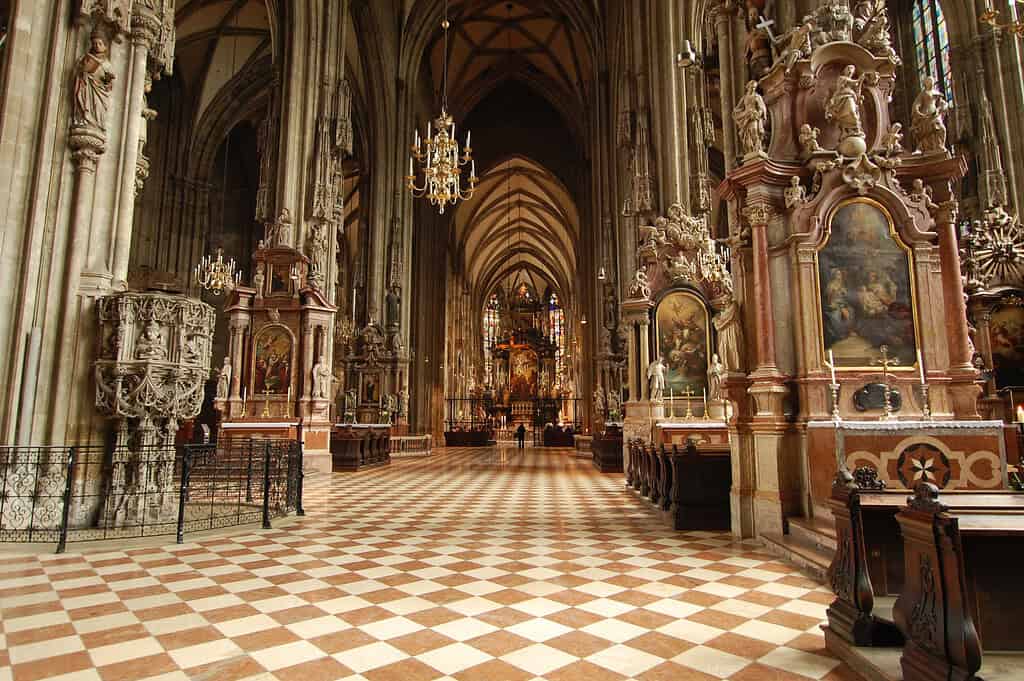
Interior of St. Stephen’s Cathedral, Vienna. Public domain via Wikimedia Commons.
You have so many churches. Great collections, wealthy collections, but also ecclesiastical collections. And then, you understand that Vienna is also a city that used to be the center of a much larger empire. And which still has an echo in today’s society, talking about who is a true Viennese. When, or where, do your ancestors come from? Where does your grand grandfather, grandmother, mother come from? Most of them, you know, are a mix.
And people always say, “every true Viennese has a Czech grandmother.”
Exactly. And this also explains the Viennese cuisine, which is very famous. When you come to Vienna, it’s not a modern, fast, loud, tough city. It’s a little bit more quiet. People like to go to coffee houses, like to eat and drink. This plays a very important role: people sit together, talk with each other. It’s not like the modern fast life you would have in Milan or New York. But it is a city that takes care of its heritage. History plays a role and also defines the people that live in Vienna.
And culture plays a very important role. You realize this when there is a new piece at the Burgtheater, the people talk about it, or when there is a new exhibition at the Albertina, people talk about it. And I think this is very special.
A Perfect Day in Vienna
I do, too. My last question… is… How would you spend a perfect free day?
A perfect free day? Okay!
I have been living in Vienna since 1983, but I still love to just walk through the city, enjoy the beauty of the city, and enjoy the pace of the city. Because you can do everything on foot. It’s very convenient. It’s so beautiful. It’s so green. The air is good. And it’s very nice just to stroll through the city.
When I have free time, I always spend some time in the coffee house, because it’s nice, either meeting a friend, or just having a cup of coffee, a cup of tea, or reading the newspapers. This is also a very typical Viennese thing you want to do. I would certainly go into one of the many museums that are here in Vienna, all worth visiting.
And then I would also recommend, in the evening, going to a concert. No matter whether you go to the State Opera or the Musikverein. It’s just overwhelming – both of them are so beautiful, and I always think it makes a better person of you. When you walk in, when you’re attentive, and you’re open, and you just feel it’s more than just listening to music. It’s more than just going into a museum and looking at its works of art. It’s always this broader experience. I think it makes you very happy.
Even though people say about the Viennese people, they’re not the most friendly. They’re a little bit grumpy, sometimes, but they’re also very happy because they know it’s such a beautiful city.
And I feel that once you get to know people here… they are unbelievably warm.
Yes, yes, yes. Warm, and very hospitable.
And, of course, if you still have time, go to a Heurigen (a rustic wine tavern, which serves the owners’ young wines). I think this is also something which I love, and this is also something which is so typical of Vienna, because Vienna is, at least in Europe, the rare city that grows its own wine within the city limits. It’s very fresh wine, the Grüner Veltliner and wines like this.
And really take your time and just walk through the city with open eyes.
Vienna really is a city of traditions. We keep them up high, because traditions have to do with identity, and once you’re proud of your identity, then, of course, you want to also show it and share it with other people.
Thank you so much.
My pleasure!
Now, I will let you eat your strudel!
FROM THE TRAVELER’S TRIPTYCH
Want to keep following the thread?
Sign up for our newsletter, The Triptych Dispatch, for updates on the latest interviews in this series, along with new articles, guides, and itineraries from The Traveler’s Triptych.
Subscribe.