Viennese Pause: A Travel Designer’s Guide to Vienna’s Old Town Cafés

A curated guide to Vienna’s Old Town cafés, where historic coffeehouses, pastry counters, and quiet corners near Stephansdom preserve the rituals of Viennese café culture.
Vienna’s Ritual of Rest and Reflection
To experience Vienna fully, follow the aroma of coffee and Apfelstrudel. Cafés and confectioners are as central to the city’s identity as its opera houses and palaces. Vienna’s cafés serve as living rooms, perfect for lingering over coffee, conversation, or a light meal. Its konditoreien are like jewelry boxes that sparkle with buttery, creamy, sugary confections whipped into art. Together, they affirm that the city’s cultural inheritance is as delicious as it is abundant.
Drawing on decades of travel to this city, I help travelers find the Vienna that best matches their tastes and tempo. In my Viennese Pause series, I explore what makes Viennese coffeehouses timeless, how they mirror daily life, and evoke distinct moods. Here, we wander through Vienna’s medieval First District around St. Stephen’s Cathedral, where centuries-old cafés and confectioners dot narrow alleys steeped in history, much of it orchestrated.
This is the second installment in a series exploring Vienna’s café culture. If you’re unsure how cafés, konditoreien, and traditional Kaffeehäuser differ, the distinctions are explained in Viennese Pause: A Travel Designer’s Guide to Imperial Cafés.
Explore Related Posts:
Imperial Cafés | Bohemian Hideaways | Old Town Institutions | Culinary Detours
Old-Town Cafés Near Stephansdom: History and Pastry in Equal Measure
CULTURAL GEOGRAPHY
Coffee and Compositions in Vienna
The streets around Stephansdom are thick with ghosts. Mozart lived just behind the cathedral at Domgasse 5 (literally “Cathedral Lane”). Now known as Mozarthaus, it’s where he worked on The Marriage of Figaro.
After his time with the Stephansdom’s boys choir, Joseph Haydn lodged nearby, just off the Michaeler Platz at Kohlmarkt 11. He shared the building with the court poet Pietro Metastasio, one of the most influential librettists of the 18th century.
At the Pasqualati House, on the old city fortifications, Beethoven worked on the Fifth Symphony, Fidelio, and Für Elise. Few places in Vienna compress so much musical legacy into so little space.
Sources: Vienna Tourist Board (vienna.info), Mozarthaus Vienna; Beethoven Pasqualatihaus; Historic Composers’ Residences in Vienna
Jump to cafés:
Café Diglas | L. Heiner | Café Demel | Café Frauenhuber | Konditorei Oberlaa
Café Diglas (Wollzeile location)
Warm Whimsy
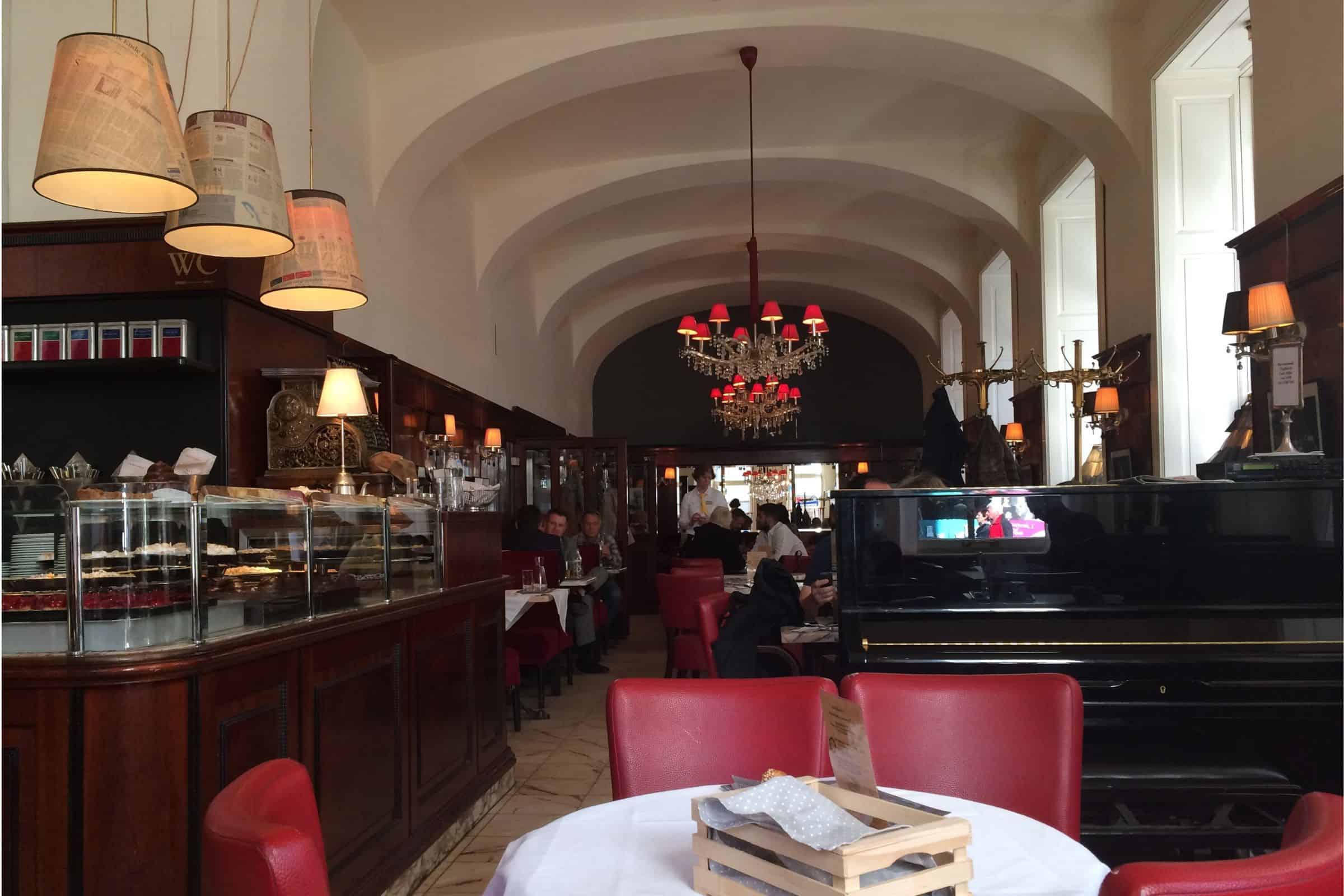
Photo: Catherine Barnes
Few places capture Gemütlichkeit quite like Café Diglas Vienna. What exactly is Gemütlichkeit? There’s no direct equivalent in English, but it describes a feeling of coziness and good cheer. For this reason, I’ve been returning to the Café Diglas on Wollzeile for thirty years and always feel completely content when I walk through its doors. Just a few streets behind St. Stephen’s Cathedral, you can easily spot its corner location by its pink façade.
Since 1875, the name Diglas has been synonymous with Viennese gastronomy and hospitality. Operator of several restaurants, cafes, and a casino, its brand was held in such high regard that Emperor Franz Joseph was the first guest when a new establishment was opened in Türkenschanzpark. The Wollzeile location was opened in 1923 by the founder’s sons and remains. Today, the enterprise remains family-run.
The space is warmly traditional. Guests are greeted by marble tabletops, brass fittings, and lace curtains. In contrast to the café’s white arched ceilings, dark wainscoting and deep red accents help to ground the room. The décor is quirky with silverware and meringue figures hanging among chandelier crystals, lampshades made from ballet tutus, and projected clock faces, as if anyone were keeping time.
Locals alight here with newspapers for the day’s first mélange and a bite of breakfast. Tourists may arrive in a hurry, but soon settle into the Diglas’ established rhythm. Service is efficient but never rushed. Conversations over coffee, wine, or a meal can last for hours. If you arrive in the mid-afternoon, you’ll miss the peak lunch-hour crowd and remain at your leisure.
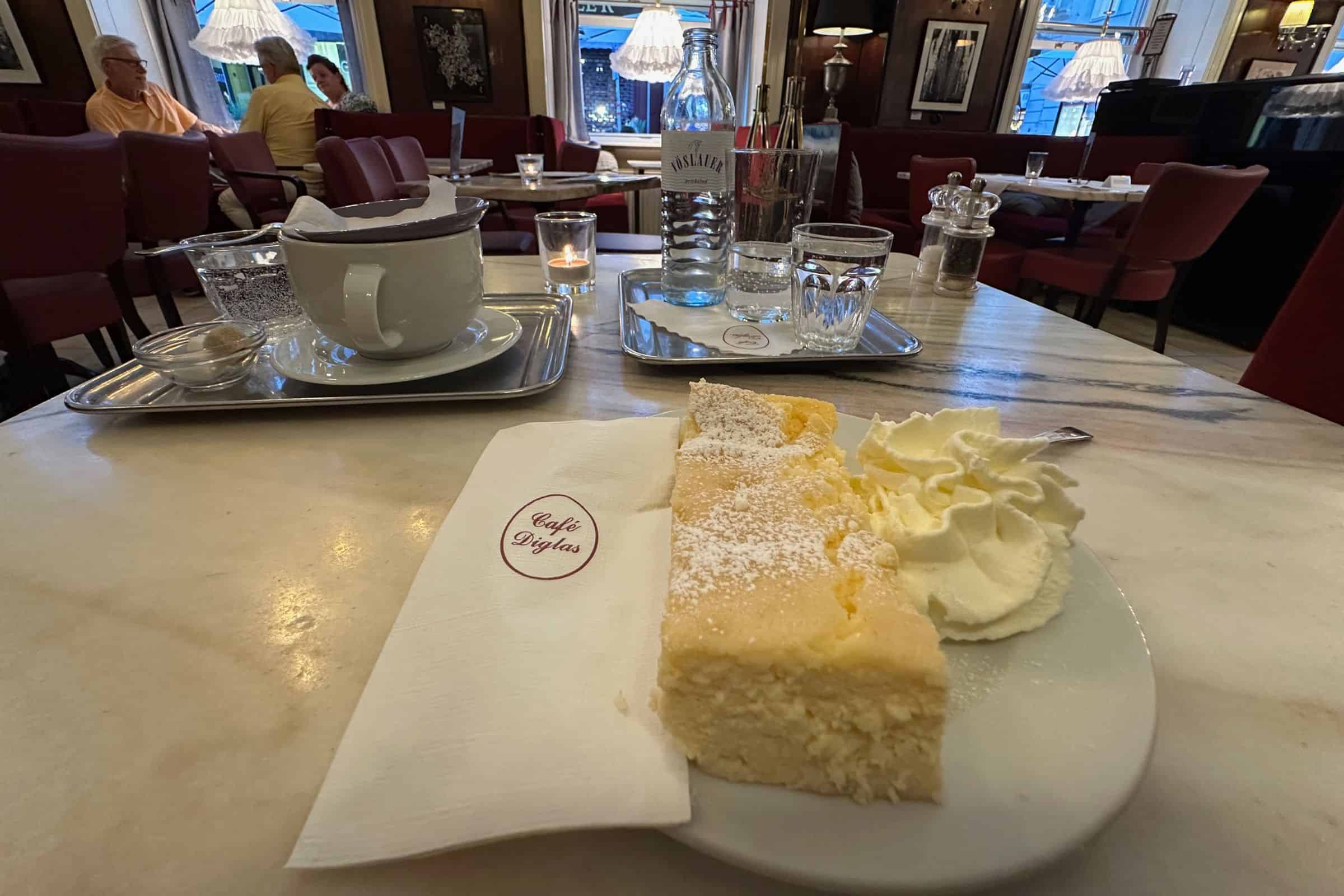
Photo: Catherine Barnes
Pastries at Café Diglas match the city’s finest. Apfelstrudel is a Café Diglas specialty, with paper-thin pastry surrounding spiced apples, raisins, and toasted breadcrumbs. Baked until golden and fragrant, it is usually served warm with vanilla sauce or cream. A lighter, creamier choice, somewhere between cheesecake and custard, would be the Topfestrudel. Or, if you’re feeling particularly indulgent, order the Kaiserschmarrn, a fluffy, shredded pancake cooked and then caramelized in butter. It’s generously dusted with powdered sugar and served with plum compote or applesauce.
VISITOR INFORMATION
Website: Café Diglas
Address: Wollzeile 10, 1010 Wien
Monday–Wednesday Hours: 8:00 AM – 10:00 PM
Thursday–Friday Hours: 8:00 AM – 10:30 PM
Saturday Hours: 9:00 AM – 10:30 PM
Sunday: Hours: 9:00 AM – 6:00 PM
Nearby: Stephansdom, Jesuitenkirche, Stadtpark
K.u.K. Hofzuckerbäcker L. Heiner
Ganache Under Glass
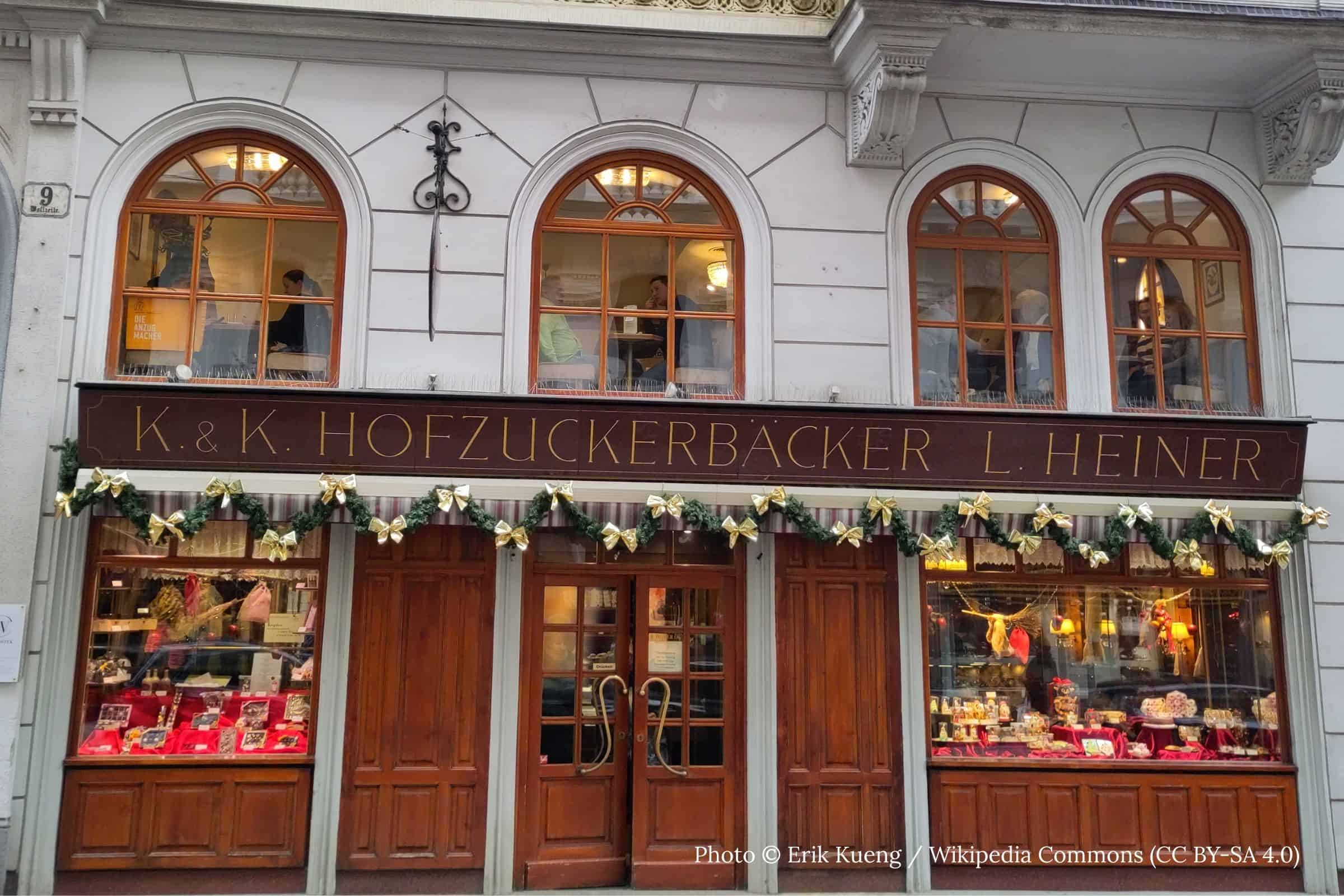
Nestled just steps from the bustle of Kärntner Straße on Wollzeile and a short walk from the Café Diglas, sits the Heiner Vienna, a family-owned café-confectionery for more than 180 years. While its shopfront takes up little space, Heiner makes an outsized impression.
Through the front doors, you’ll find dark-wood paneling, etched mirrors, Biedermeier furniture, and vitrines brimming with petit-fours, tortes, and seasonal specialties. The cumulative effect is akin to sitting in a small but elegant jewel box.
At Heiner, everything revolves around sweets. In 2025, an expert jury from Gault&Millau awarded Heiner’s doughnuts first place among seventeen competitors from the greater Vienna area. The menu also features Viennese classics: Sachertorte, Esterházy, Dobostorte, fruit mousses, marzipan figures, and handmade chocolates bearing the K.u.K. Hofzuckerbäcker mark. The bakery is also renowned for its Kardinalschnitte, a layered cake with red and white imagery, created by Heiner in 1933 in honor of Vienna’s Archbishop.
IMPERIAL DESIGNATION
Decoding the Distinction of “K.u.K. Hofzuckerbäcker
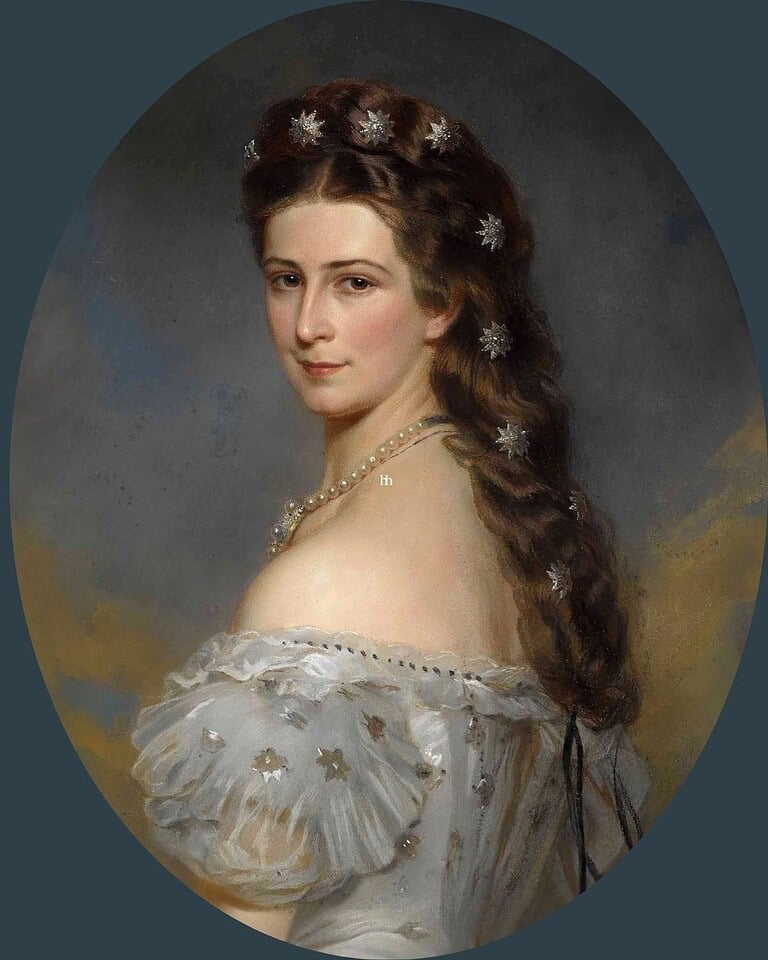
The abbreviation K.u.K. stands for Kaiserlich und Königlich (“Imperial and Royal”). During the Austro-Hungarian Empire, this title designated businesses that supplied the court of Emperor Franz Joseph I and Empress Elisabeth (“Sisi”). A Hofzuckerbäcker (“Court Confectioner”) was a confectioner or pastry maker officially appointed to create sweets for the imperial household.
Only a few Viennese establishments earned this distinction, including Demel, Gerstner, Sacher, and L. Heiner. It remains a symbol of exceptional quality, craftsmanship, and a connection to Vienna’s imperial past. Unsurprisingly, all four still proudly display the K.u.K. Hofzuckerbäcker mark today.
Source: Vienna Tourist Board (vienna.info), Imperial Suppliers: The ‘k.u.k. Hoflieferanten.
The Republic of Austria honored Heinl with another award in 1997. Since that time, the brand has been associated not only with the Imperial and Royal double eagle but also with the Republic’s coat of arms.
The clientele mirrors the atmosphere: regulars stop for breakfast or a mid-morning slice, while tourists seek calm and sweet treats. Visit the Wollzeile location for the full ambience.
VISITOR INFORMATION
Website: L. Heiner
Address: Wollzeile 9, 1010 Wien (“Wool Row”)
Monday–Saturday Hours: 9:00 AM – 7:00 PM
Sunday Hours: 10:00 AM – 7:00 PM
Nearby: Kärntner Straße, Stephansdom, Café Diglas (Wollzeile), Graben
Café Demel
Window Dressing
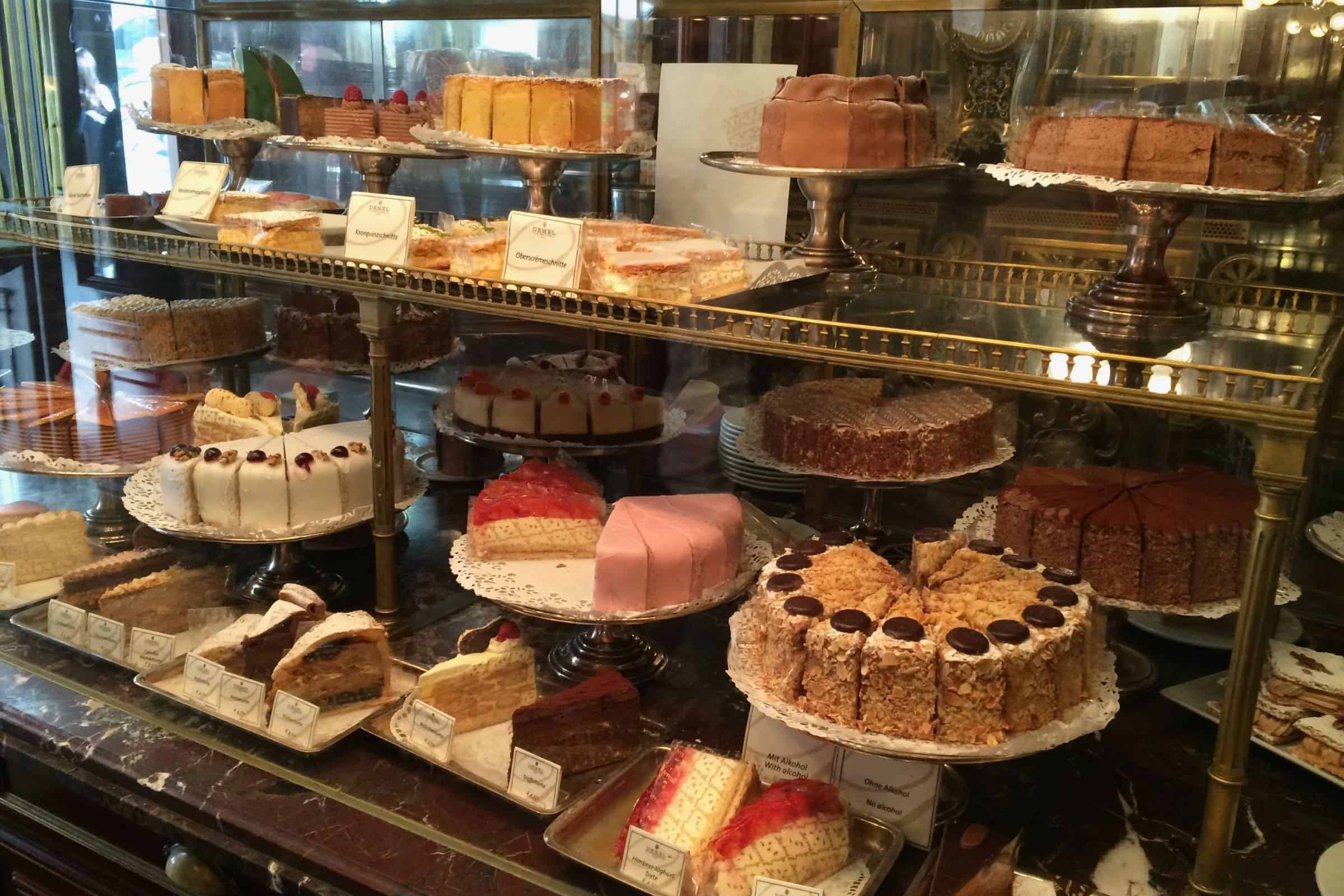
Photo: Catherine Barnes
Founded in 1786, Café Demel Vienna isn’t just a café; it’s an institution. A temple to Viennese confectionery and former Imperial Court supplier, the monogram, K.u.K. Hofzuckerbäcker, still adorns its façade. Demel, another of Vienna’s cafes from which Wes Anderson might draw inspiration, is as famous for its window displays as it is for its cakes.
Its windows on the Kohlmarkt feature elaborate seasonal (and everyday) displays that blur the line between pâtisserie and stage set. This tradition took off in the 1960s, when Baron Berzeviczy-Pallavincini conceived of the café’s windows as a theatre of the street, a move that retained Demel’s imperial grace even as the city modernized.
He staged fairy-tale scenes in sugar, marzipan, and chocolate, set among custom props and fabrics. This innovative mix of art and marketing was previously unknown in the city. Famous architect and co-founder of the Wiener Werkstätte, Josef Hoffmann, declared Berzeviczy-Pallavincini “the last romantic” in Vienna.
Berzeviczy-Pallavincini’s whimsical aesthetic still defines Demel’s visuals today. The current team creates intricate and fantastical vignettes (think gingerbread cathedrals, pastel Easter tableaux, and hand-painted boxes) that continue to stop passersby in their tracks.
Visitors enter the main level, greeted by carved wood, mirrored walls, glass vitrines, stucco accents, and sparkling chandeliers. Packaging and graphics echo Demel’s historic motifs. Behind glass partitions, pastry chefs whisk cream and layer tortes with theatrical flourish. Beyond the shop, the space opens into small salons rather than a single main hall, as is typical of Viennese cafes. Even when busy, one can find intimate corners for quiet conversation.
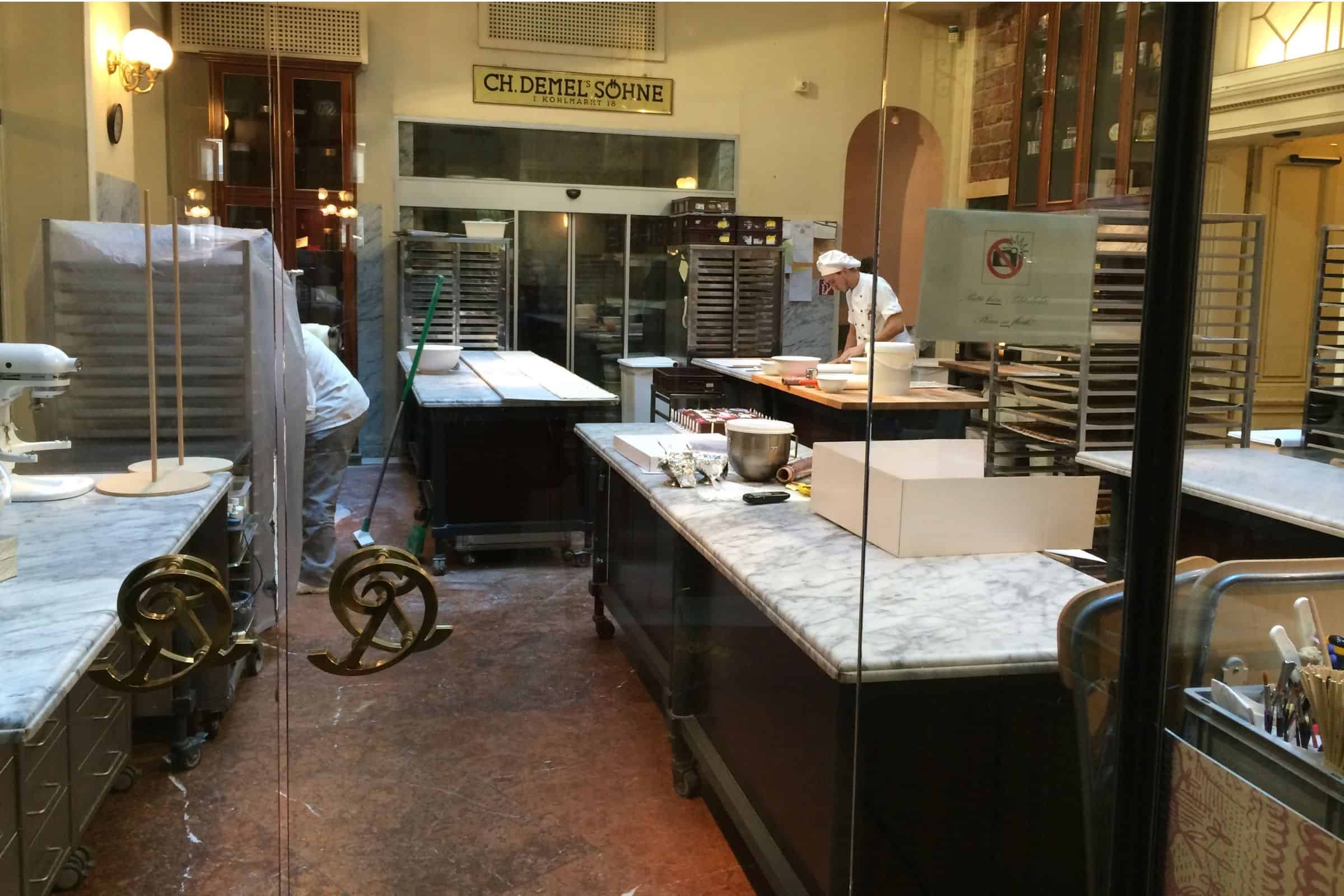
Photo: Catherine Barnes
Among Demel’s signature desserts is a chocolate cake layered with apricot jam and topped with a bittersweet glaze. If this sounds reminiscent of the famed Sacher Torte, that’s because it is.
CAFE LORE
Three Generations, Two Cafes, and a Cake War
In 1832, Franz Sacher created the now-famous dessert for Prince Metternich. Franz’s son Eduard made his own version of the cake. And in the 1930s, Eduard’s son brought that recipe to Demel after the Hotel Sacher went bankrupt.
By 1954, this backstory escalated into a full-blown cake war and a lengthy legal battle over rights to the torte. Ultimately, both sides shared a piece of the pie (or cake, as you will). The eventual settlement gave each its own version: The Hotel Sacher with the “Original Sachertorte,” and Demel with the “Eduard-Sacher-Torte.”
Sources: Demel (demel.com), History of the Sachertorte; Vienna Tourist Board (vienna.info)
For historical context on Café Sacher and its place in Vienna’s café culture, see Viennese Pause: A Travel Designer’s Guide to Imperial Cafes.
If you’re not convinced by a chocolate and apricot jam cake (neither am I), Demel’s menu offers many other options. Try the Annatorte, a layered chocolate-and-orange-liqueur torte named after Anna Demel, that features nougat layers and rich pastry cream. Or, in a nod to Austria’s Slavic pastry traditions, order the rolled poppy-seed Mohnpotitze.
In honor of Empress Sisi’s legacy, you might also try the violet ice cream called Veilcheneis. Or you can buy a box of her favorite candied violets (or candied roses), delicate flower petals preserved in sugar, which are just as delicious. Both are sold in the shop and come in the café’s iconic violet boxes.
The cafe doesn’t accept reservations, meaning you’re likely to encounter a queue. For the immersive experience, unique décor, and mouth-watering pastries and small bites, it’s worth the wait (at least once). Otherwise, content yourself with a box of chocolates and a view of the window display.
VISITOR INFORMATION
Website: Café Demel
Address: Kohlmarkt 14, 1010 Wien
Hours: Daily: 9:00 AM – 7:00 PM
Nearby: Hofburg Palace, Michaelerplatz, Kohlmarkt, Graben
Café Frauenhuber
Chamber Café
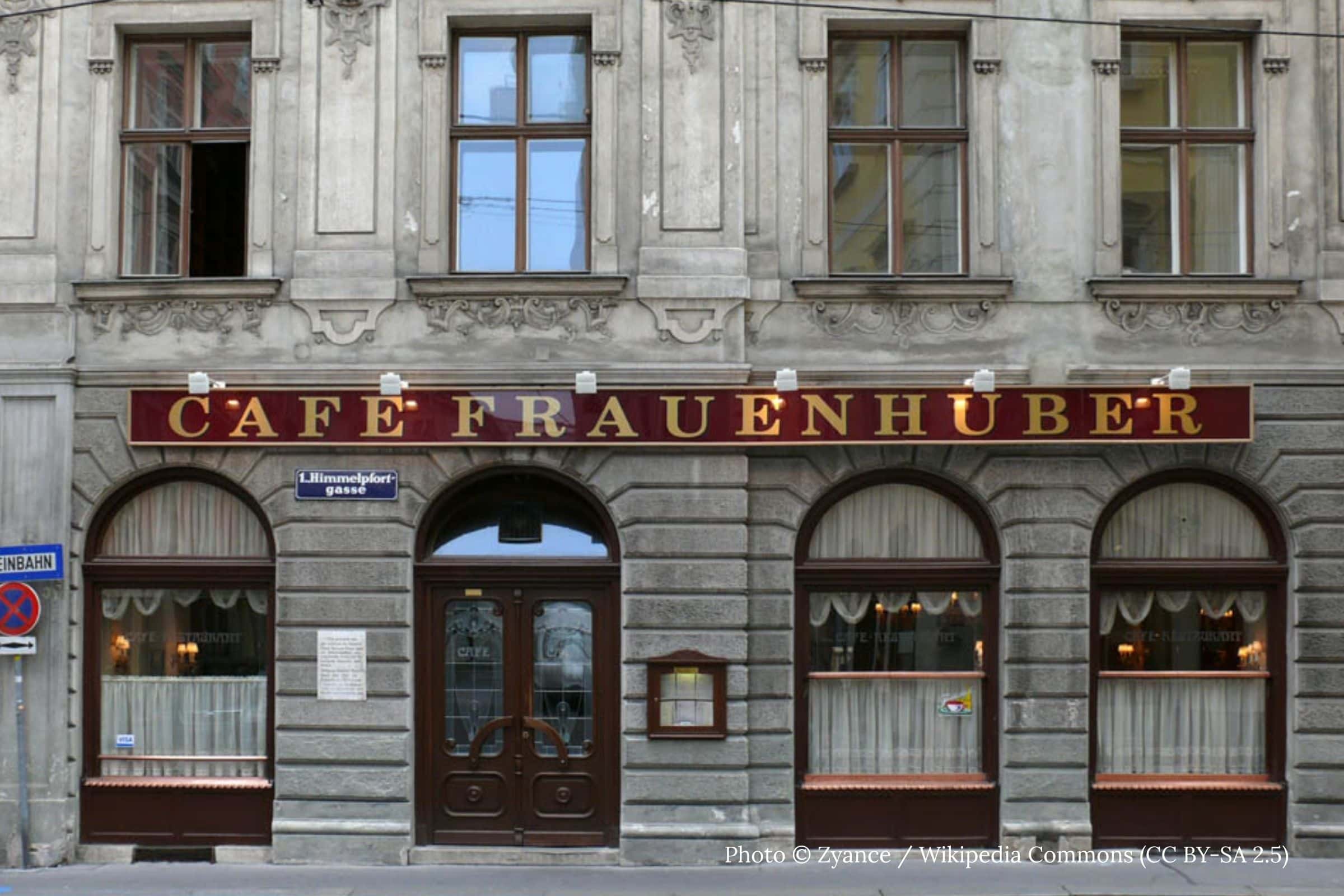
Café Frauenhuber is widely regarded as Vienna’s oldest continuously operating coffeehouse. Serving guests since 1824 in a townhouse dating back to the 18th century, the café was originally located on the street off the old meat market (“Fleischmarkt”) and was known for “witty conversation.”
The café later moved to its current address on Himmelpfortgasse, a building that once hosted private concerts by Mozart and Beethoven. History records that in November 1788, Mozart performed a pastorale by Handel. And, in April 1797, Beethoven presented his “Quintet for fortepiano with four horns.”
Today, the building’s significance is marked by a discrete plaque near the entrance. The café honors past tradition by hosting piano evenings (check the cultural events calendar on their website).
The spirit of those evenings still lingers in a space defined by white arched ceilings, parquet floors, and crystal chandeliers. Wainscoting and brocade complete the setting. Waiters in black waistcoats are reserved and move at an unhurried pace, balancing silver trays of mélange and pastries.
The menu leans classic with proper Viennese coffee variations and traditional desserts, including the House Cake, Warm Chocolate Hazelnut Cake, and Raspberry Yogurt Cake, among many other famous tortes.
The café also offers patrons breakfast, lunch, and dinner comprised of fresh, traditional fare. The patrons, a mix of neighborhood regulars, professors, and travelers, prefer simple pleasures, old school civility, and local authenticity.
VISITOR INFORMATION
Website: Café Frauenhuber
Address: Himmelpfortgasse 6, 1010 Wien
Monday–Saturday Hours: 8:00 AM – 10:00 PM
Sunday Hours: 10:00 AM – 10:00 PM
Nearby: Stephansdom, Neuer Markt, Kapuzinergruft, Kärntner Straße
Konditorei Oberlaa
Modern Classic
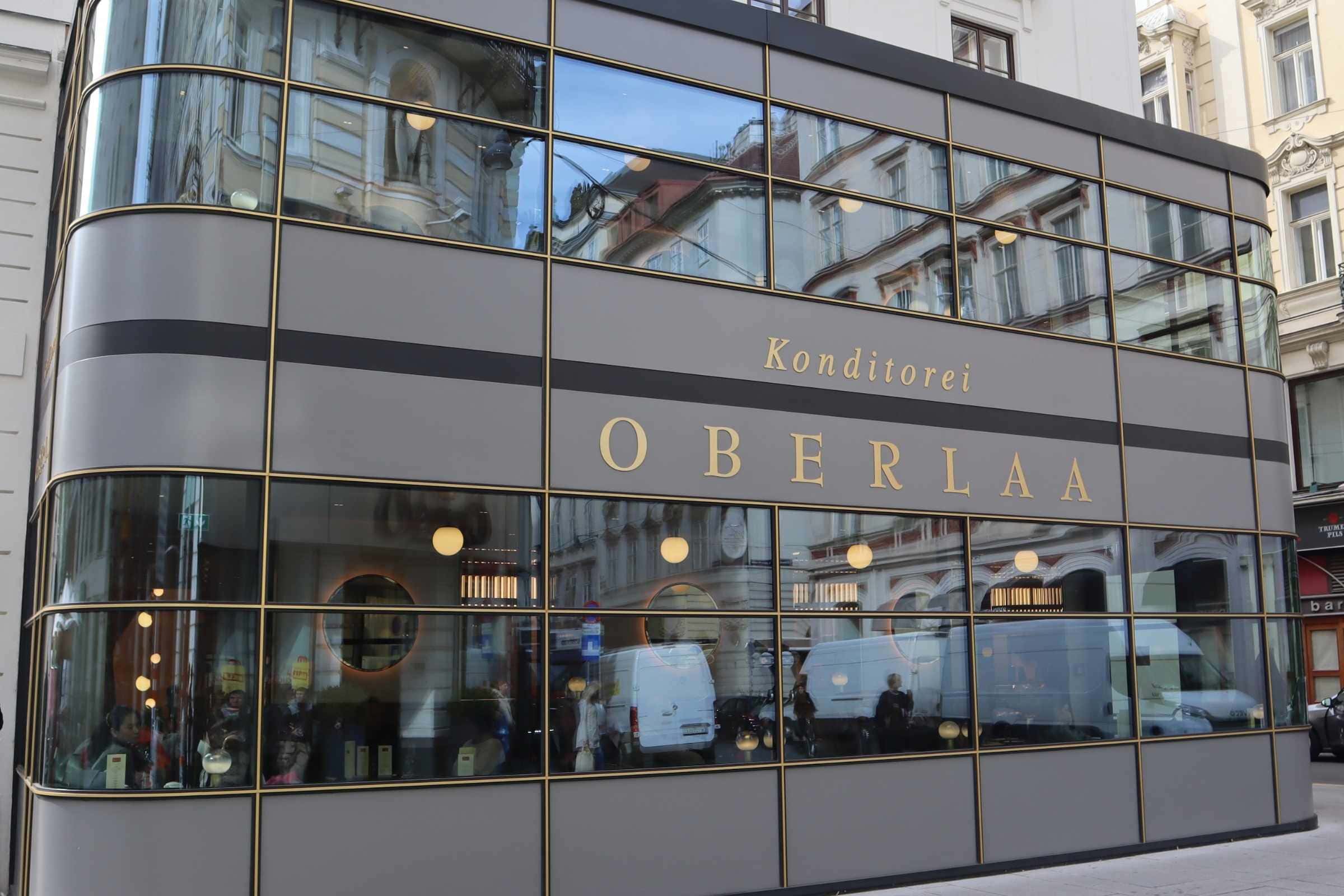
Photo: Catherine Barnes
If you’re looking for a modern café that respects tradition, Konditorei Oberlaa reinterprets Viennese pastry for the twenty-first century. A relatively new spot by Viennese standards, founded in 1974, it’s already approaching iconic status for its flawless preparation and presentation.
If the distinctions between cafés, traditional coffeehouses, and Konditoreien still feel blurry, the first installment in this series—Viennese Pause: A Travel Designer’s Guide to Vienna’s Imperial Cafés, offers a brief overview.
With several locations, this review focuses on the café on Neuer Markt Square. Once home to flour markets and aristocratic residences in the baroque style, the square still features some neo-classical and historicist facades alongside its many luxury shops and refined pastry shops.
The square’s visual identity is anchored by the nearby Capuchin Church (with its Imperial Crypt) and the Donnerbrunnen Fountain, built in 1738-39 by sculptor Georg Raphael Donner. Visitors might be surprised to learn that this beautiful fountain was commissioned by the municipal government, a novelty at the time. It was also among the first pieces of public art to shed religious and imperial motifs.
This Oblerla location is ideal for a late-morning tea or a sweet interlude from shopping. The glass conservatory offers a view on clear days and a cozy cocoon on rainy days.
The interior is bright, contemporary, and drenched in pastel hues reminiscent of the macarons that fill its gleaming vitrines (along with petit fours, strawberry mouse cakes, vanilla cream pastries, and lemon tortes). In warmer months, seating spills onto the square, offering prime people-watching.
VISITOR INFORMATION
Website: Café Oberlaa (Neuer Markt)
Address: Neuer Markt 16, 1010 Wien
Hours: Daily, 8:00 AM – 8:00 PM
Nearby: Neuer Markt, Donnerbrunnen, Kapuzinergruft (Imperial Crypt), Capuchin Church, Kärntner Straße, Stephansdom
Vienna’s Old Town Cafés bridge centuries of hospitality, craft, and ritual. Whether you prefer an old-school café or a bright patisserie, each cup and confection is part of the city’s story. If you’re looking for another vibe, explore our other “Viennese Pause” posts.
Related posts:
Imperial Cafés | Bohemian Hideaways | Culinary Detours
If you’d like to explore Vienna’s local cuisine and café culture with an expert guide, Context offers a thoughtfully designed, food-focused private walking tour.